Bronterre News

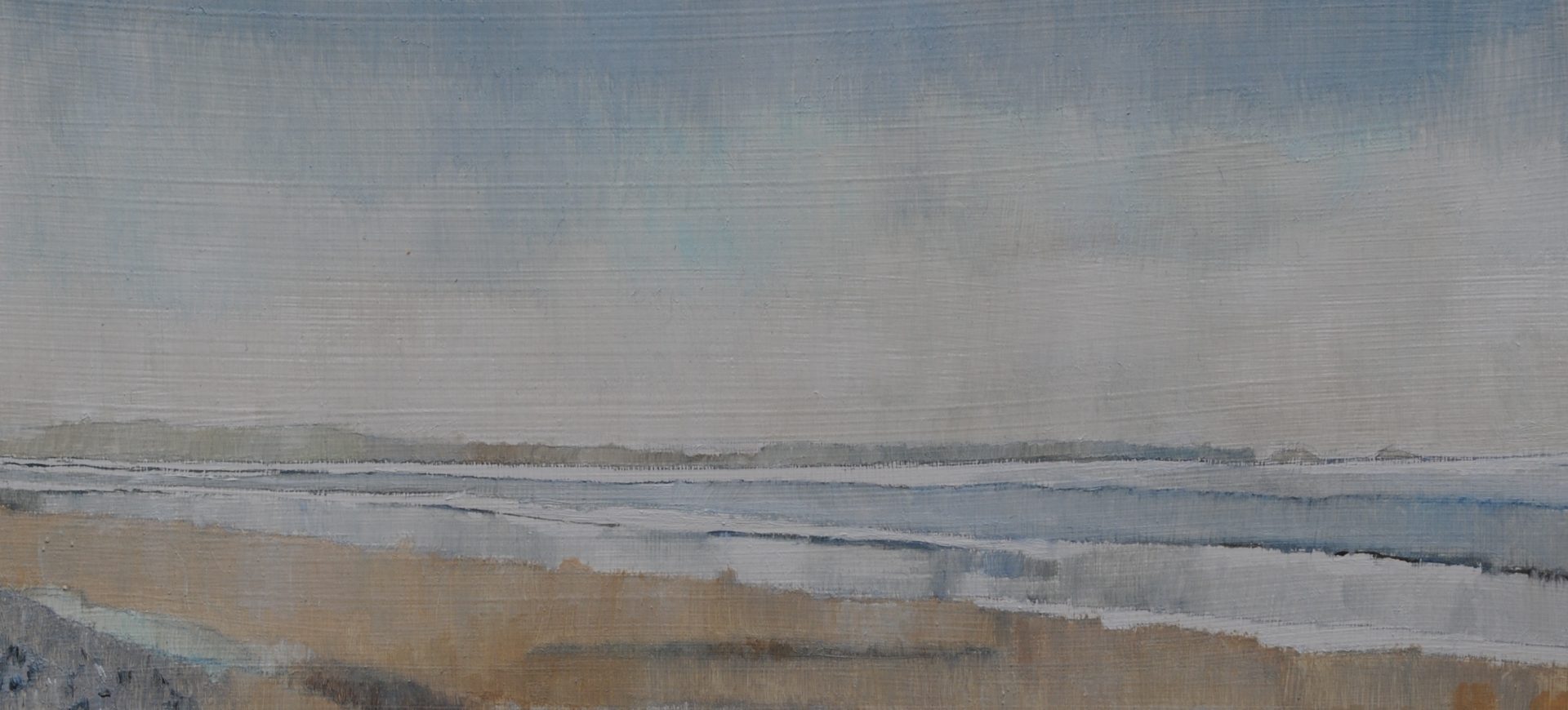
Comment and analysis by journalist Patrick O'Brien in tribute to Chartist leader, radical agitator and campaigning journalist James Bronterre O'Brien (1804-1864). BELOW: Ynyslas, Ceredigion, unscathed (see under Environment for pieces on highly controversial plan to excavate this spectacular unspoilt beach and erect an uglifying cast-metal effigy of a tree). Oil painting, 2019, by Nicki Orton

15 September 2020

IS IT time, in a mood of some despair, to go back to bed, to play the piano (as my next-door neighbour has just been doing, very prettily) or to do some transcendental meditation?

  Not the first, quite possibly the second and certainly – because of the deep relaxation it will very likely impart – the third.

  The question is prompted after reading a piece by John Harris in yesterday’s Guardian. The headline serves as a warning: Disruption and destruction: the new way of ruling Britain.

  If that sends a chill through your prefrontal cortex, read no further. If on the other hand your subgenus anterior cingulate cortex – that region of the brain associated with conquest of fears –  authorises you to proceed, see what you think.

  So Harris quotes the sociologist Zygmunt Bauman, from his book Intimations of Postmodernity, in which Bauman summarises the French theorist Jean Baudrillard’s “portrayal of a culture in which ‘images represent nothing but themselves, information does not inform, [and] desires turn into their own objectives’.”

  This, Harris says, shines a penetrating light on the politics of today. “If a policy provokes, that may be its only point; when anything triggers anger and upset, the outrage will quickly drift away from what caused it, and itself become the focus of the argument. There is little point looking for anything more solid or certain.”

  Tellingly, Baudrillard wrote, in 1981, long, long before we were open to being saturated by internet-borne data: “We live in a world where there is more and more information, and less and less meaning.”

  Harris observes: “The social media age surely proves him right: as the online US magazine Vox recently put it, the ‘sheer volume of content, the dizzying number of narratives and counter-narratives, and the pace of the news cycle are too much for anyone to process’ ”.

  As he says, this is why, amidst endless crises, the people at the heart of the UK government are unbowed. “Old conventions about probity can now safely be ignored, so Dominic Cummings and Gavin Williamson did not have to resign over lockdown trips or A-level chaos. Brexit grows more terrifying by the day, but if it all goes wrong, the government will be able to raise the flag and frame dire consequences as a moment of national destiny. Even if the UK itself might be breaking apart, there is no sign of a foot anywhere near the brake.”

  The answer, however, can’t be to capitulate to the anarchic madness peddled with such glee and coldness by Cummings, Johnson and their confederates. 

  Part of the response must be to realise the value and the power of our microworlds and the strength of their innate defences against the macro-ravagers represented, in the UK’s case, by Downing Street and their supporters, both real and sycophantic.

  Sit in a pub or a café. The conversations around you are extremely unlikely to be about politics, or even about Covid-19 (although the rarity of discussions about the origins of the latter is a bit of a shame). 

  But that doesn’t mean people have discarded their political antennae. By and large, they get on with their lives quite happily with, probably, in semi-conscious acts of self-defence, less and less reference to the fraught worlds beyond their own. Subliminally, however, they are perfectly alert, and at some point they – notably EU leave voters – will put their foot down. The hope must be that that moment is not very much longer delayed.

  As for the Vox verdict: well, don’t gorge on all the stuff available, just try being very selective.

Categories: Uncategorised

12 September 2020

COVID-19 gets an airing every single week on BBC Radio 4’s Any Questions? 

  But listen in vain for perspicacity, for discussion about anything but the immediate.

  It was no different on last night’s programme. The presenter, Chris Mason, is basically a good, plain-speaking journalist, not afraid to challenge or to push the mealy-mouthed. 

  But, on Covid, will he spin debate into something faintly out of the ordinary, will he make landfall on the heavily avoided shores that point the finger of very likely blame for the pandemic at China’s disgraceful and, until recently, officially encouraged and outrageous practice of farming wild animals, with all the danger that poses for the implanting into human populations of novel viruses from the wild? Er, no. Actually not.

  The following – sent today – is fairly typical of pieces I’ve emailed to Any Answers? over the months that haven’t been used: 

‘WORRYING ABOUT the proliferation of the coronavirus, about lockdowns, about schools, about social and economic impacts is understandable and very necessary.  

  But in the process we are utterly failing to see the wood for the trees, with great success blotting out, to our longer-term detriment, the bigger picture.  

  The BBC and other news outlets are dispensing practically everything you could ever want to know about Covid-19. Staggeringly, however, they are almost invariably failing to delve into the pandemic’s origins and, even more importantly, to propose what needs to be done to prevent future, and similarly devastating, viral assaults.   

  Months ago, a United Nations agency tried very hard to warn us: the world, it said, is giving all its attention to the health and economic symptoms of the pandemic but is ignoring its cause.   

  As a result, a steady stream of diseases could be expected to jump from animals to people in coming years. Because the continuing destruction of the natural environment and its wildlife will result in a succession of animal diseases being transmitted to people.  

  But the UN story wasn’t journalistically sexy, so it was virtually ignored, including by the BBC.   

  And so we never heard the near-desperate words of Professor Delia Grace, lead author of the report by the UN Environment Programme (Unep) and the International Livestock Research Institute (Ilri), as she went like an arrow to the heart of the matter. 

  “There has been”, she said, “so much response to Covid-19, but much of it has treated it as a medical challenge or as an economic shock.  

  “But its origins are in the environment, food systems and animal health. This is a lot like having somebody sick and treating only the symptoms and not treating the underlying cause, and there are many other zoonotic diseases with pandemic potential.”  

  In the same way, we virtually never hear anything about the dangers of zoonotic transfer posed by China’s farming of wild animals, or about parallel risks from the illegal wildlife trade, as highlighted in July by Prince William.  

  And so the chances pile up that, waiting in the wings are Covid-20, Covid-21, Covid-22… 

  Wake up politicians, wake up journalists, before it’s just too late.’

PRINCE WILLIAM has come as near as dammit to blaming the coronavirus pandemic on the illegal wildlife trade.

  Giving as broad a hint as his advisers will have believed he could risk while staying within royal protocol, the second in line to the UK throne in July told a virtual meeting of  leading conservation organisations there had never been such a strong “global incentive” to tackle the lawless commercialisation of wild creatures.

  Referring to illnesses that can pass from animals to people, he said: “Right now, there is a real chance to ensure that the urgent steps that the world must take to prevent future zoonotic disease pandemics are designed in a way that also helps to eradicate the illegal wildlife trade.” 

  The meeting was co-ordinated by United for Wildlife, an organisation William set up in 2014 to bring together groups working to prevent species extinction.

Backed by The Royal Foundation, his main philanthropic vehicle, it seeks to unite wildlife charities with law enforcement agencies, governments and corporations.

  The event, chaired by former UK foreign secretary William Hague, attract about 700 attendees and heard discussion not only on how to end the illegal wildlife trade but on the impact of Covid-19 on conservation, as well as the links between zoonotic diseases and the wildlife trade.

  Giving as broad a hint as his advisers will have believed he could risk while staying within royal protocol, the second in line to the UK throne in July told a virtual meeting of  leading conservation organisations there had never been such a strong “global incentive” to tackle the lawless commercialisation of wild creatures.

  Referring to illnesses that can pass from animals to people, he said: “Right now, there is a real chance to ensure that the urgent steps that the world must take to prevent future zoonotic disease pandemics are designed in a way that also helps to eradicate the illegal wildlife trade.” 

  The meeting was co-ordinated by United for Wildlife, an organisation William set up in 2014 to bring together groups working to prevent species extinction.

Backed by The Royal Foundation, his main philanthropic vehicle, it seeks to unite wildlife charities with law enforcement agencies, governments and corporations.

  The event, chaired by former UK foreign secretary William Hague, attract about 700 attendees and heard discussion not only on how to end the illegal wildlife trade but on the impact of Covid-19 on conservation, as well as the links between zoonotic diseases and the wildlife trade.


6 July 2020

AT LAST a major voice is saying what this blog has been bleating about for months: the world is giving all its attention to the health and economic symptoms of the coronavirus pandemic but is ignoring its cause. 

  As a result, a United Nations report declares, a steady stream of diseases can be expected to jump from animals to people in coming years.

  Why? Because the continuing destruction of the natural environment and its wildlife will result in a stream of animal diseases being transmitted to human beings.

  The number of such ‘zoonotic’ epidemics is rising, from Ebola to Sars to West Nile virus and Rift Valley fever, with the root cause being the destruction of nature by people and the growing demand for meat, the report says.

  Even before Covid-19, two million people died from zoonotic diseases every year, mostly in poorer countries. The coronavirus outbreak was highly predictable, the experts say.

  “[Covid-19] may be the worst, but it is not the first,” the UN environment chief, Inger Andersen, says.

  The report says a “one health” approach that unites human, animal and environmental health is vital, including much more surveillance and research on disease threats and the food systems that carry them to people.

  Professor Delia Grace, the lead author of the report by the UN Environment Programme (Unep) and the International Livestock Research Institute (Ilri), goes to the heart of the matter: “There has been so much response to Covid-19 but much of it has treated it as a medical challenge or an economic shock.

  “But its origins are in the environment, food systems and animal health. This is a lot like having somebody sick and treating only the symptoms and not treating the underlying cause, and there are many other zoonotic diseases with pandemic potential.”

  Doreen Robinson, Unep’s chief of wildlife, says: “An intense surge in human activity is affecting the environment all across the planet, from burgeoning human settlements to [food production], to increasing mining industries. 

  “This human activity is breaking down the natural buffer that once protected people from a number of pathogens. It’s critically important to get at the root causes, otherwise we will consistently just be reacting to things.”

  Inger Andersen says the science is clear that if we keep exploiting wildlife and destroying our ecosystems, then we can expect to see a steady stream of these diseases jumping from animals to humans in the years ahead.” 

“The primary risks for future spillover of zoonotic diseases are deforestation of tropical environments and large-scale industrial farming of animals, specifically pigs and chickens at high density”

Wildlife and livestock are the source of most viruses infecting people, and the report cites a series of drivers of outbreaks, including rising demand for animal protein, more intensive and unsustainable farming, greater exploitation of wildlife, surging global travel and the climate crisis. It also says many farmers, regions and nations are reluctant to declare outbreaks for fear of damaging trade.

  “The primary risks for future spillover of zoonotic diseases are deforestation of tropical environments and large-scale industrial farming of animals, specifically pigs and chickens at high density,” says the disease ecologist Thomas Gillespie of Emory University in the US, an expert reviewer of the report. “We are at a crisis point. If we don’t radically change our attitudes toward the natural world, things are going to get much, much worse. What we are experiencing now will seem mild by comparison.” 

  The report highlights some examples of where zoonotic risks are being managed. In Uganda, deaths from Rift Valley fever have been reduced by using satellite data to anticipate heavy rainfall events, which can produce mosquito swarms and trigger outbreaks.

  The UN report is the latest stark warning that governments must address the destruction of the natural world to prevent future pandemics. In June, a leading economist and the UN said the coronavirus pandemic was an ‘SOS signal for the human enterprise’, while in April the world’s leading biodiversity experts said more deadly disease outbreaks were likely unless nature was protected.

  “At the heart of our response to zoonoses and the other challenges humanity faces should be the simple idea that the health of humanity depends on the health of the planet and the health of other species,” said Andersen. “If humanity gives nature a chance to breathe, it will be our greatest ally as we seek to build a fairer, greener and safer world for everyone.”

pastedGraphic.png

Pandemics result from destruction of nature, say UN and WHO

5 July 2020

LET’S CUT to the chase, courtesy of Nature magazine.

  As it points out, there’s strong evidence that the Covid-19 virus originated in bats. But how, it asks, did it get from bats to people? Researchers overwhelmingly think that it’s a wild virus, which probably passed to people through an intermediate species. But no-one has found the virus in the wild yet.

  So, scientists being scientists, around the world they’ve been in a flat spin running computational models, cell-studies and animal experiments to try to pinpoint the absolutely specific viral host that kicked off the pandemic.

  Unsurprisingly, tracking down the precise intermediate species involved is very tricky. As Lucy van Dorp, a geneticist from University College London (UCL), tells Nature: “It is quite possible we won’t find it. In fact, it would be exceptionally lucky if we land on something.”

  But in the midst of this investigative maelstrom, something stirs. It’s called, to be blunt, the bleedin’ obvious, a concept which, to the scientific mind, is usually inadmissible.

  But Michelle Baker, a comparative immunologist at the Commonwealth Scientific and Industrial Research Organisation in Geelong, Australia, doesn’t mind stepping out of line.

  Throwing off the scientific straitjacket, she sets the scene. It’s useful, she says, to know which animals are susceptible, to manage the risk that they might become virus reservoirs and possible sources of infection in people.

  Michelle then delivers the killer line: “But when trying to narrow down the culprit, it seems sensible to focus on those animals in close contact with bats.” Eureka!

  The ‘it’s staring you in the face’ moment is taken up by Peter Daszak, president of the non-profit EcoHealth Alliance in New York City, who has visited many villages, wildlife-markets, bat-caves and farms in southern China over the last 15 years.

  He says: “Animals at wildlife-farms in China are one of the first places to look. These farms stock many captive-bred animals, from civets to raccoon dogs and coypu – a large rodent – often living close to livestock such as pigs, chickens and ducks.”

  “These farms are usually wide open to bats, which feed at night above the pens, and some of which roost in the buildings. They are also usually linked to people’s houses so that whole families are potentially exposed.

  “The opportunities for these viruses to spill over across a very active wildlife–livestock–human interface is clear and obvious.”

  The way ahead is equally obvious: shut down, permanently, the wildlife-farms, thus eradicating a clear transmission route for viruses such as Covid-19, which has so far killed more than 500,000 people around the world and laid waste lives and economies on a vast and unprecedented scale.

Wildlife-farms: an abhorrent and brutal trade with lethal repercussions for creatures both beautiful and often rare, and for human health

Wildlife-farms have been operating in China on a vast scale. Nearly 20,000 of them have been raising species including peacocks, civet cats, porcupines, pangolins, ostriches, wild geese and boar, bamboo rats, snakes, toads and squirrels and, until about early February, the practice was still being promoted by Chinese government agencies  as an easy way for people in rural China to get rich.

  There may now be room for a chink of optimism. With general agreement that Covid-19 – as at 5 July the virus had killed 530,668 people worldwide and infected 11,241,655 – originated in wildlife including live wolf-pups, golden cicadas, scorpions and civets sold at the Huanan seafood wholesale market in Wuhan in early December, China issued a temporary ban (note temporary) on the wildlife trade to curb the spread of the virus at the end of January, and began a widespread shutting of breeding facilities in early February.

  In two provinces only, China is now offering wildlife-farmers a government buy-out. This would give people in Hunan and Jiangxi provinces, neighbouring regions in the southeast of the country, the opportunity to be compensated for switching to growing fruit, vegetables, tea-plants, or herbs for traditional Chinese medicine. Very much less welcome is the option to breed other animals, such as pigs and chickens.

  However, according to Humane Society International, the buy-out plan does not tackle the huge numbers of wild animals bred for fur, traditional Chinese medicine and the pet trade, the most valuable portion of the wildlife trade and worth an estimated $55bn.

  There is also concern about what will happen to the wild species if farmers go for the buy-outs. The proposal has three options – release of animals into the wild in suitable and non-residential habitats; utilisation by other industries such as zoos, laboratory research, and traditional medicine; or mass culling. Only the first of these is acceptable, and it would need to be diligently overseen.

  The impression is that a start may have been made to heading off the danger of a Covid-20, 21, 22 and onward coronavirus by means of a jump from an animal to a human. But enormous international vigilance and pressure remain essential, and at the moment there is precious little evidence of such. In the UK, for example, the BBC has evidently completely abdicated its responsibility in this direction.

  Reduced to its essence, the message remains: all the death and turmoil caused by Covid-19 is attributable to a small minority of people displacing, disturbing, killing and eating certain wild animals, and animals which came into contact with the wild creatures.

  If ‘we’ hadn’t intruded on their territories, wrecking their habitats, if ‘we’ hadn’t captured and caged and sold for meat the wild animals in question, none of this would have happened.

  But instead of ramming this fact into the public’s skulls – an imperative activity if theoretically endless new coronaviruses are to be avoided – too much of the UK print and broadcast media focuses almost entirely on sideshows: how many drinkers went on the razz in Soho on 4 July?; Leicester in a second lockdown; when should schools reopen?; should Dominic Cummings have gone on a day trip from Durham to the east coast?

  I’ve been a hack for 58 years. I find it sad therefore to say so many of my colleagues are doing us all a disservice.

5 July 2020

LET’S CUT to the chase, courtesy of Nature magazine.

  As it points out, there’s strong evidence that the Covid-19 virus originated in bats. But how, it asks, did it get from bats to people? Researchers overwhelmingly think that it’s a wild virus, which probably passed to people through an intermediate species. But no-one has found the virus in the wild yet.

  So, scientists being scientists, around the world they’ve been in a flat spin running computational models, cell-studies and animal experiments to try to pinpoint the absolutely specific viral host that kicked off the pandemic.

  Unsurprisingly, tracking down the precise intermediate species involved is very tricky. As Lucy van Dorp, a geneticist from University College London (UCL), tells Nature: “It is quite possible we won’t find it. In fact, it would be exceptionally lucky if we land on something.”

  But in the midst of this investigative maelstrom, something stirs. It’s called, to be blunt, the bleedin’ obvious, a concept which, to the scientific mind, is usually inadmissible.

  But Michelle Baker, a comparative immunologist at the Commonwealth Scientific and Industrial Research Organisation in Geelong, Australia, doesn’t mind stepping out of line.

  Throwing off the scientific straitjacket, she sets the scene. It’s useful, she says, to know which animals are susceptible, to manage the risk that they might become virus reservoirs and possible sources of infection in people.

  Michelle then delivers the killer line: “But when trying to narrow down the culprit, it seems sensible to focus on those animals in close contact with bats.” Eureka!

  The ‘it’s staring you in the face’ moment is taken up by Peter Daszak, president of the non-profit EcoHealth Alliance in New York City, who has visited many villages, wildlife-markets, bat-caves and farms in southern China over the last 15 years.

  He says: “Animals at wildlife-farms in China are one of the first places to look. These farms stock many captive-bred animals, from civets to raccoon dogs and coypu – a large rodent – often living close to livestock such as pigs, chickens and ducks.”

  “These farms are usually wide open to bats, which feed at night above the pens, and some of which roost in the buildings. They are also usually linked to people’s houses so that whole families are potentially exposed.

  “The opportunities for these viruses to spill over across a very active wildlife–livestock–human interface is clear and obvious.”

  The way ahead is equally obvious: shut down the wildlife-farms, thus eradicating a clear transmission route for viruses such as Covid-19, which has so far killed about 450,000 people around the world and laid waste lives and economies on a vast and unprecedented scale.

Wildlife-farms: a vile trade with lethal repercussions for human health

Wildlife-farms have been operating in China on a vast scale. Nearly 20,000 of them have been raising species including peacocks, civet cats, porcupines, pangolins, ostriches, wild geese and boar, bamboo rats, snakes, toads and squirrels and, until about early February, the practice was still being promoted by Chinese government agencies  as an easy way for people in rural China to get rich.

  There may now be room for a chink of optimism. With general agreement that Covid-19 – as at 5 July the virus had killed 530,668 people worldwide and infected 11,241,655 – originated in wildlife including live wolf-pups, golden cicadas, scorpions and civets sold at the Huanan seafood wholesale market in Wuhan in early December, China issued a temporary ban (note temporary) on the wildlife trade to curb the spread of the virus at the end of January, and began a widespread shutting of breeding facilities in early February.

  In two provinces only, China is now offering wildlife farmers a government buy-out. They would give wildlife farmers in Hunan and Jiangxi provinces, two neighbouring regions in the southeast of the country, the opportunity to be compensated for switching to grow fruit, vegetables, tea plants, or herbs for traditional Chinese medicine. Less welcome is the option to breed other animals, such as pigs and chickens.

  However the buy-out plan does not tackle the huge numbers of wild animals bred for fur, traditional Chinese medicine and the pet trade, according to Humane Society International, the most valuable portion of the wildlife trade, worth an estimated $55bn.

  There is also concern about what will happen to the wild species if farmers opt for the buy-outs. The proposal has three options – release of animals into the wild in suitable and non-residential habitats; utilisation by other industries such as zoos, laboratory research, and traditional medicine; or mass culling.

  The impression is that a start may have been made to heading off the danger of a Covid-20, 21, 22 and onward coronavirus by means of a jump from an animal to human. But enormous international vigilance and pressure remain essential, and at the moment there is precious little evidence of such. In the UK, for example, the BBC has evidently completely abdicated its responsibility in this direction.

  Reduced to its essence, the message remains: all the death and turmoil caused by Covid-19 is basically attributable to a small minority of people displacing, disturbing, killing and eating certain wild animals, and animals which came into contact with the wild creatures.

  If ‘we’ hadn’t intruded on their territories, wrecking their habitats, if ‘we’ hadn’t captured and caged and sold for meat the wild animals in question, none of this would have happened.

  But instead of ramming this fact into the public’s skulls – an imperative activity if theoretically endless new coronaviruses are to be avoided – too much of the UK print and broadcast media focuses almost entirely on sideshows: how many drinkers went on the razz in Soho on 4 July?; Leicester in a second lockdown; when should schools reopen?; should Dominic Cummings have gone on a day trip from Durham to the east coast?

  I’ve been a hack for 58 years. I find it sad therefore to say so many of my colleagues are doing us all a disservice.

ONE OF the most infuriating things in the Covid-19 discussion is the obsessive insistence that it wouldn’t be right to act to prevent a future novel coronavirus outbreak in the absence of solid proof that any measure we took was based on certainty.

  Thus we cannot, the argument goes, push for a permanent and absolute and cast-iron ban on trading in wild animals for human consumption – and for traditional Chinese medicine – on the highly likely ground that Covid-19 originated in a live animal and seafood market in Wuhan, China, with the disease being transmitted from illegally-traded bat or pangolin meat.

  We would need irrefutable proof, the argument goes, before pushing for, insisting on, before demanding with all the pressure and passion we can muster, that markets must cease this hateful, and probably highly dangerous, trade forthwith and forever.

 Oh, really? And why? Why, with approaching 220,000 people worldwide dead as a result of Covid-19, with lives and other aspects of health and economies having been wrecked, why is it other than commonsensical to act on the basis of a well-founded suspicion? 

  Why, for that matter, not act on the basis that there is no proof that the wildlife wet markets were not responsible for this unparalleled death and destruction?

  Has everyone advocating delay and prevarication forgotten about the precautionary principle?

  In The Guardian of 28 April, Graham Readfearn writes about “…uncertainty about several aspects of the Covid-19 origin story that scientists are trying hard to unravel, including which species passed it to a human. They’re trying hard because knowing how a pandemic starts is a key to stopping the next one.”

  Later, Readfearn adds: “Analysis of the first 41 Covid-19 patients in medical journal the Lancet found that 27 of them had direct exposure to the Wuhan market. But the same analysis found that the first known case of the illness did not. 

  “This might be another reason to doubt the established story. Prof Stanley Perlman, a leading immunologist at the University of Iowa and an expert on previous coronavirus outbreaks that have stemmed from animals, says the idea the link to the Wuhan market is coincidental “cannot be ruled out” but that possibility “seems less likely” because the genetic material of the virus had been found in the market environment.”

  You get the picture. Do not act to outlaw this in any case obscene wild animal trade without absolute proof that it’s to blame for the biggest single global disaster (excluding world wars) in living or written memory.

  Such a position would have served the world well in, for example, the run-up to that adventure in large-scale blood-letting remembered as the Iraq invasion. Instead, much of the West was content then to act on a weakly founded suspicion that Saddam was concealing weapons of mass destruction. No waiting for conclusive proof there, then.

  Where action would involve putting pressure on China over its wildlife meat trade, it’s a different matter. Offending the world’s biggest money-lender, to which about 150 countries are in hock, might be thought a dangerous game.

  It’s rather like the situation in Dublin recently at a commemoration of the Armenian massacre. An acquaintance of mine asked why the Irish government was not represented. Came the reply: “We can’t afford to offend Turkey.

  Enter Edvard Munch…

ANTENNAE for 5g, the latest mobile-phone technology, are springing up all over rural Wales, generally on the tops of lamp-standards. The new system needs them every 100 to 200 metres, so there are lots. Concerns that the antennae could suppress immune systems, making people more susceptible to such as Covid-19, are riling the BBC. 

  The broadcaster is emphatic: “Scientists say the idea of a connection between Covid-19 and 5g is ‘complete rubbish’ and biologically impossible.” What a pity our public news service fails to point out that scientific opinion on the matter is in fact far from unanimous, that more than 180 scientists and doctors from 36 countries say 5g will substantially increase exposure to electromagnetic radiation, and that the EU should delay roll-out “until potential hazards for human health and the environment have been fully investigated by scientists independent of industry.”

SOME THINGS gnaw away at you. In my case, it’s the vital angle all but forgotten about in the saturation coverage of the coronavirus crisis.

  News outlets dispense practically everything you could ever want to know about Covid-19. Apart, staggeringly, from one thing – sustained delving into its origins and, even more importantly, on what must be done to prevent future, and similarly devastating, viral assaults. There, we meet an uncomfortable reticence.

  We know precisely what’s been threatening to bring Wales and places worldwide to their knees. Why our towns have been looking like soporific Sunday afternoons circa 1958; why the NHS is under terrible stress; why businesses are burning through cash reserves and could face ruin, and financial and job security sent reeling.

  The culprit’s familiar. Magnified, it’s the virus that looks like a mouldy orange pierced by bunches of tiny red flowers. So, assuming that familiarity will have bred contempt, why is there so little political and media interest in action to prevent future coronavirus variants we are warned are a distinct possibility? 

  The basics we know: severe acute respiratory syndrome (SARS), Middle East respiratory syndrome (MERS) and now SARS-CoV-2, the new coronavirus disease 2019, or Covid-19, have all sprung from viruses that have infected wild animals and evolved into new human coronaviruses able to spread like wildfire.

  But do not blame wildlife. We’re talking here about wolf-puppies, civets, porcupines, snakes, pangolins (fascinating scaled mammals resembling miniaturised plateosaurus dinosaurs). They didn’t ask to be rounded up and crammed, alive, into small cages before being killed for human consumption, and for putting in Chinese medicine.

The solid evidence is that the source of Covid-19 was the Huanan meat market in the city of Wuhan in China, where wild animals have been banged up after being plucked from their natural environments. 

  If they had simply been left alone, any viruses they may have been carrying would have posed no danger to human beings. Instead, this ghastly trade has turned wild creatures into a commercial commodity, and enabled virulent viruses to leap from animals to people.

  In February, to curb the spread of Covid-19, China temporarily closed its so-called wet markets, which trade in an array of wildlife, and other live animals. But, from the middle of April, almost incredibly, it started reopening the markets. For the time being, the ban on selling wildlife apparently remains. But that’s hardly likely to calm fears the wildlife trade will creep back in, raising the terrifying prospect of a repeat of the Covid-19 disaster. 

  There’s no argument. Permanent closure of these markets would help to end the terrible trading of vulnerable and precious wild animals, and at the same time protect people, their social settings and their economies from another viral epidemic or pandemic.

  So where are the voices that back a permanent ban? Where the linked debate on people’s pitiless encroachment on wildlife territory? Except marginally, mainstream news media and politicians say next to nothing. Last month, the US government called on China to permanently close its wildlife markets, a demand now echoed by the Australian prime minister.  

  But there is no sustained howl of exasperation, no uncompromising demand for a decisive end to wet markets trade in wild animals to head off a potential Covid-20, 21 and 22. Why? Because China is the world’s biggest money-lender, and people hesitate to bite the hand that feeds them? Because of an overwhelming desire to ‘get back to normal’, a normality which may be short-lived unless people start looking beyond the immediate?  Whatever, the raging indignation which should be caused by the deaths of hundreds of thousands of people, by the wrecking of economies and lives, is expressed by only a handful of niche and low-circulation publications. That’s surprising. After all, Grenfell Tower led to ultra-forensic investigations; sudden deaths are followed by inquests.

  Then there’s of course the bigger picture – the crying need for people to realise, once and for all, that the health of all life on the planet is linked. Deforestation and logging, for example, and agricultural expansion into undisturbed places, are not only unconscionable assaults on wildlife but endanger human health. Destroy forests and we chase wild animals from natural habitats and into contact with farmed livestock in unbalanced ecosystems, offering infectious agents the potential to run riot in human populations.

  The United Nations’ head of biodiversity, Elizabeth Maruma Mrema, puts it neatly: “The message we are getting is if we don’t take care of nature, it will take care of us.”