Bronterre News

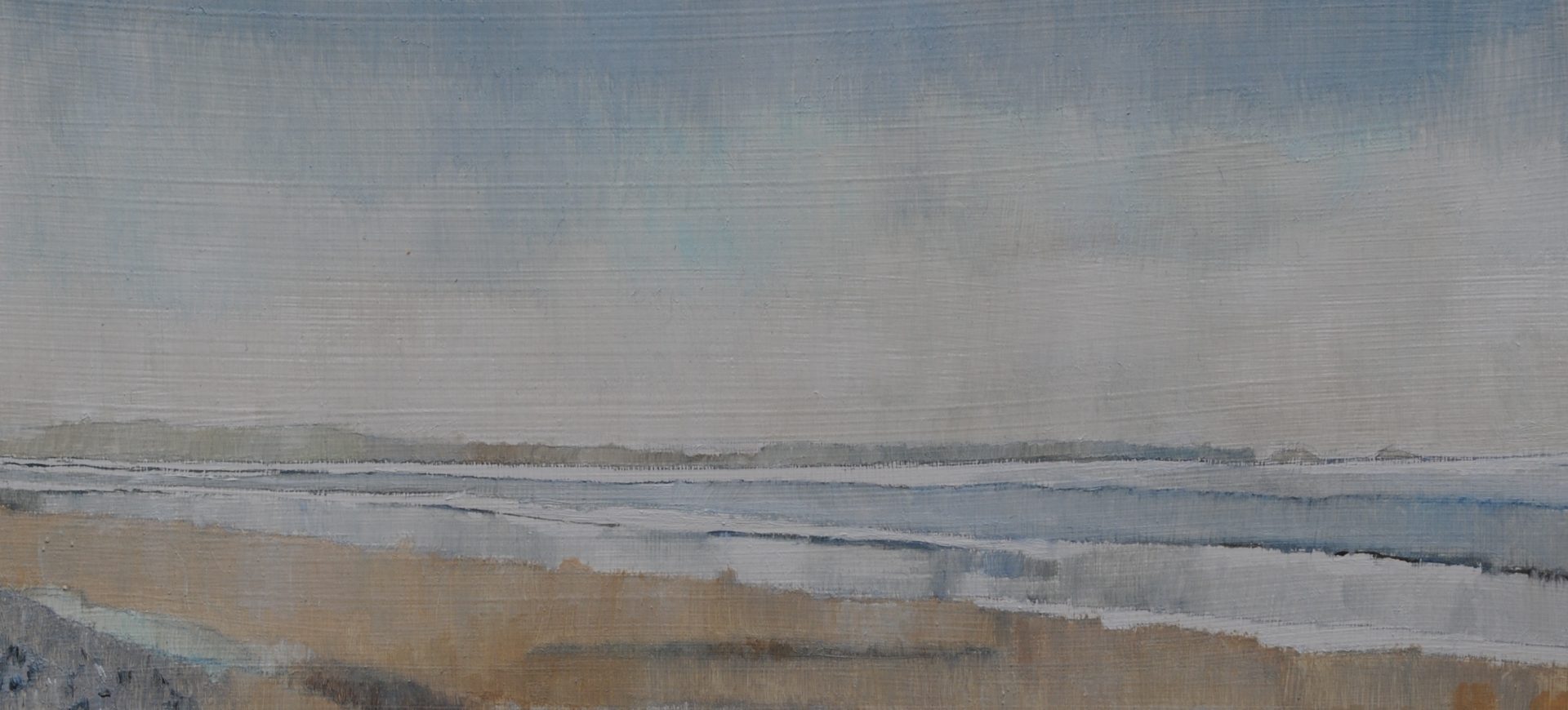
Comment and analysis by journalist Patrick O'Brien in tribute to Chartist leader, radical agitator and campaigning journalist James Bronterre O'Brien (1804-1864). BELOW: Ynyslas, Ceredigion, unscathed (see under Environment for pieces on highly controversial plan to excavate this spectacular unspoilt beach and erect an uglifying cast-metal effigy of a tree). Oil painting, 2019, by Nicki Orton

Or a tale of journalists as fake outsiders with bruised personas

NOT SO LONG ago, British media hostility towards Julian Assange was pretty much the norm. If there has for a while now been a marked softening of attitude, the long-lived peculiar, and largely unanalysed, animosity of the bulk of British publications and broadcasters towards the imprisoned WikiLeaks whistleblower is nevertheless not easily forgotten. It can, however, be easily explained.

  To begin at the end… The newly mellowed climate of opinion was neatly illustrated by The Guardian on Friday 10 December, the day the high court ruled that Assange can be extradited to the US, where he could face up to 175 years in prison. 

  “The decision”, the paper editorialised, “is not only a blow for his family and friends, who fear he would not survive imprisonment in the US. It is also a blow for all those who wish to protect the freedom of the press…

  “Regardless of Mr Assange’s wellbeing, the US should not be demanding his extradition, and the UK should not be granting it.

  “He is charged under the Espionage Act, including with publishing classified material. The case against the 49-year-old relates to hundreds of thousands of leaked documents about the Afghanistan and Iraq wars, as well as diplomatic cables, which were made public by WikiLeaks working with The Guardian and other media organisations. They revealed horrifying alleged abuses by the US and other governments which would not otherwise have come to light.”

  The paper goes on to quote Agnès Callamard, secretary general of Amnesty International: “Virtually no-one responsible for alleged US war crimes committed in the course of the Afghanistan and Iraq wars has been held accountable, let alone prosecuted, and yet a publisher who exposed such alleged crimes is potentially facing a lifetime in jail.”

  Supportive coverage came too from MailOnline, which on 12 December reported: “The fiancée of Julian Assange has accused UK authorities of playing the role of ‘executioner’ after the WikiLeaks founder suffered a stroke in Belmarsh prison. 

  “Stella Moris, 38, said the 50-year-old was left with a drooping right eyelid, memory problems and signs of neurological damage after the stroke in October.

  “Campaigners believe the incident was triggered by the stress of the ongoing High Court battle over whether or not he should be extradited to the US…”

  Such kindly coverage is in marked contrast to the undisguised antagonism of many journalists that emerged after Assange caused an international uproar when, in late 2010, WikiLeaks released about 750,000 documents and cables which appeared to point to alleged US war crimes and other misconduct in Iraq and Afghanistan. Assange had fed the documents to The New York Times and The Guardian, who in turn published fact-checked and redacted versions of the documents.

  A further batch of documents received by WikiLeaks contained 400,000 pages of confidential information detailing seven years of US operations in Afghanistan, along with a cache containing highly sensitive American diplomatic cables. They amounted to what the American magazine Vanity Fair saw as “one of the greatest journalistic scoops of the last 30 years”. And it is this estimation which provides a vital clue about why The Guardian, at least, and Assange were soon afterwards to fall out big time.

  As The Guardian’s David Leigh told the magazine: “We were starting from: ‘Here’s a document. How much of it shall we print?’ Whereas Julian’s ideology was: ‘I shall dump everything out and then you have to try and persuade me to cross a few things out.’ We were coming at it from opposite poles.”

  According to The Independent’s Ian Burrell, Assange had been given a letter by The Guardian editor Alan Rusbridger promising not to use material from “batch three” of the documents (the diplomatic cables) without the consent of WikiLeaks. But The Guardian managed to obtain the “batch three” material through a separate source, after they were passed to a freelance journalist by a disgruntled former colleague of Assange’s.

   Regarding itself as free of its arrangement with Assange, The Guardian shared the material with The New York Times and the German news magazine Der Spiegel and prepared to publish without waiting for permission from Assange. When Assange discovered the plan, he threatened to sue. 

  Rusbridger managed to placate Assange, Burrell says, but on 18 December 2010 the relationship plummeted again as the paper ran a front page story claiming “Julian Assange furore deepens as new details emerge of sex crime allegations”. Assange was deeply hurt that the paper – where he had spent long hours in its building and shared meals with its staff – had turned on him. 

  Before long, the bulk of the rest of the British media progressively decided it didn’t like Assange and began sniping at him and showing gratuitous aggression. There had been of course the Swedish sex allegations – always vehemently denied by Assange – and his years of refuge in the Ecuadorian embassy in London. 

  But a large part of what was making itself felt was journalistic professional resentment and frustration. Here was a new kid on the block who was putting everyone else to shame, churning out the makings of stories that were wall-to-wall world exclusives. 

  This just wasn’t right. A journalistic upstart was producing more scoops before breakfast than most seasoned hacks could hope to find in a lifetime in the trade.

  Mainstream news media types would never admit it, but they found this intolerable. They felt themselves outrageously upstaged – and humiliated. 

  In another way, they knew they had been rumbled; they were being forced to admit to themselves that their carefully cultivated personas as outsiders and dissidents was, at the worst, phoney and, at best, only superficially true. At a more fundamental level, they were in fact part of the Establishment. Unlike Assange, they would stop well short of putting their own liberty and security on the line in opposition to state authoritarianism. For some of those with their claws into the Australian, the horrible truth was that they were posers and courtiers.

  Further, Fleet Street and broadcasters saw their pre-eminence as news managers as being under threat. It was their privilege to decide what weight, if any, was accorded to any given story. That’s the way it had always been. But the sheer irresistibility of the WikiLeaks fare was taking this power out of their hands.

  Furious about being eclipsed, and very jealous, the frustration of the seasoned scribes turned into aggression. For some, though, other emotions emerged – feelings of failure, even of guilt. Here were very important stories they had failed to discover, deeply disturbing facts and incidents they had consequently failed to reveal. 

  From then on, Julian Assange would be their favourite reviled bête noir. Now, however, years later, with sensational WikiLeaks documents no longer in evidence, the British media feels it can afford to be nice about him, on the offensive, even, about his predicament, especially perhaps increasingly aware that they too, like Assange, could find themselves at risk of gagging, and retribution.

  And, their feathers no longer ruffled by the non-conformist in their midst, they may again be experiencing guilt, this time about their treatment of the man they demonised who, they may now fully realise, is sacrificing so much in the cause of press freedom. 

National Library of Wales silent on plan to release thousands of publicly-owned pictures for prestigious new Aberystwyth art gallery

EACH YEAR, about 70,000 visitors flock to the National Museum of Wales in Cardiff, a majority, probably, to see its scintillating collection of more than 2,500 oil paintings.

  At Swansea’s Glynn Vivian Art Gallery, hundreds of British and European old masters and surrealist and impressionist works attract around 40,000.

  In London, millions visit the National Gallery with its 2,300 pictures.

 As cultural and touristic magnets, art galleries enchant and cheer and inspire and, just now, transport us to somewhere blissfully beyond grinding anxieties about climate disruption and the pandemic. 

  They are also very good for local economies. Unlike seasonal tourism, they are year-round magnets. Machynlleth’s Museum of Modern Art knows this, as does Margate, where the establishment of the Turner Contemporary art gallery is credited with increasing tourism by 62 per cent and helping to inject £20m into the local Kent economy.

  For Aberystwyth, such an asset would be a godsend. A major new art gallery would be guaranteed to revive the spirit and stimulate the economy of a town sagging under the shadow of Covid-19.

  It would greatly strengthen the cultural kudos Aberystwyth already enjoys, while decisively putting the town on the map as a fine-art mecca comparable with the best anywhere. helping enormously to reanimate a town badly knocked in recent years by job-losses and by shop-closures in the wake of the online-buying obsession and Covid.

  So is this achievable? Absolutely it is. This is a prize enticingly, and entirely, within our grasp, and one that would splendidly complement the unfolding Old College cultural centre project. For, unknown to most people, Aberystwyth already possesses a single huge, unique and magnificent collection of paintings. And this a collection, crucially, that is owned by the public. 

  The scale is astounding. For the roughly 2,200 publicly-owned oil paintings held by the National Library of Wales in its fine Edwardian building overlooking Aberystwyth is almost equal in number to those at the National Gallery, or at the National Museum of Wales. 

  The national library collection is unique, partly because it includes a phenomenal array of riveting portraits of people central to the social, political, educational and political history of Wales over centuries, as well as glorious landscapes and other works, and the world’s biggest collection of landscapes and portraits by Kyffin Williams, probably Wales’s most applauded 20th century artist. In total, the range is vast, and of staggering beauty and variety in subject-matter and styles.


Other titans represented include William Coldstream, Gainsborough, Augustus John, Gwen John, Turner (his Dolbadarn Castle is on long-term display), Gwynedd Tomos, Gladys Vasey, Evan Walters, Claudia Williams and Evan Williams. And there is wonderful work by numerous others.  

  The big difference between the great collections of Cardiff and London, and Aberystwyth’s, is that the vast bulk of ours are never seen by us, the people who own them. Instead, they are kept in storage. A very limited number sometimes appear in exhibitions at the library, and some occasionally turn up, on loan, at galleries elsewhere.

  But, mostly, this is a monumental cultural storehouse with its doors firmly closed, its magnificent contents nearly all, and nearly always, unseen, these thousands of works of art instead kept in stacks deep in the library building on Penglais.

  To be sure, there are blank walls in parts of the library where some of these paintings could be shown, but aren’t. At the same time, exhibitions in the library’s Gregynog Gallery inevitably squeeze out pictures in the stored collection.

  All of which argues that the library should be receptive to any serious proposal which would allow – no doubt on a rotational basis – these thousands of works to see the light of day. After all, artists paint to be seen. Kyffin Williams, for example, who left the library a total of 1,700 works, and more than £400,000, particularly wanted his output to be displayed publicly.

  Also, there is a persuasive argument that dispersal of great national collections offers greater protection than centralisation under one roof. The serious fire at the library in April 2013 underlines this. The blaze was in the roof, but there can be no guarantee that a similar disaster couldn’t happen in parts of the building where paintings are kept.

  So where could our new Aberystwyth gallery be housed? Look no further perhaps than the former St Paul’s Chapel in Upper Great Darkgate Street, a spacious late 19th-century grade 2-listed pile built by the town’s Wesleyans. Abandoned as a chapel in 1992, it was converted into a pub – The Academy – seven years later, a bizarre metamorphosis given Wesleyans’ animosity towards drink. The pub closed down 18 months ago. This classically handsome building, and an attached former schoolroom dating from 1903, are for sale (about £475,000) or lease (around £20,000).

  Another possibility could be the disused Deva building on the seafront, or (though probably too small) the nearby university-owned grade 2-listed Assembly Rooms, the national library’s original home. There may be other suitable town centre buildings, and a purpose-built gallery shouldn’t be seen as an impossibility.

  Potential financial backing for what would be a major scheme would include National Lottery money awarded by the Arts Council of Wales, which, very relevantly, also distributes Welsh Government funds to “nurture and develop high-quality Welsh arts activity.” Councils should also be asked to chip in.

  But what of the national library itself? Will it support release to the public gaze its publicly-owned paintings? So far, the signs are not good.

  I outlined my proposal in a 400-word message to the library and was told it “sounds like a great idea”, and “something to be discussed with our exhibitions officer…” A fortnight later, having heard nothing, I emailed again. The reply: my message had been forwarded “to one of the directors for him to get back to you.” But no-one has. Odd.

£15,000, 14pc, rise as care-workers, cleaners told: you’re worth 1.75pc

CEREDIGION council knows it has no defence against the indefensible. So it has decided it won’t even make a stab at finding one.

  It knows there is absolutely nothing convincing it can say that would let it off the hook over its stunningly unjustifiable decision to give the authority’s chief executive a 14 per cent pay rise, while offering a pauper’s 1.75 per cent to important frontline council staff, including care-workers, school cleaners, refuse-collectors and librarians.

  Other figures serve to underline the total unacceptability of this insensitive award. The £15,000 increase lined up for chief executive Eifion Evans from next April is alone considerably more than the kind of poverty pay significant numbers of workers and pensioners in Ceredigion get in a year. It will take his salary to £130,108.

  At the same time, 14 per cent is more than three times the current rate of inflation, thus inevitably helping to shore up the hoary old employer refrain that financial responsibility must rule out above-inflation pay awards. Well, we’re of course talking about rank and file employees, you understand… 

  How unsurprising then that Plaid Cymru council leader Ellen ap Gwyn did not reply to my invitation to say whether she was content that other staff, including care-workers, were being offered 1.75 per cent, and whether she agreed that, for lower paid workers, the size of the chief executive’s pay award would be demoralising.

  Ignoring this and other questions, she instead comes up with a 430-word rigmarole presumably intended to corral us into submission.

  But it won’t work. No amount of blather about the chief executive’s rocketing salary arising from “the third phase of the review of the council workforce and pay structure”, which has seen “heads of services being replaced by 12 corporate lead officers”, detracts from the inevitable conclusion that this surge in pay is nothing but exorbitant and totally unacceptable. 

  Unconscionable even, which probably explains why the council’s previous chief executive, Bronwen Morgan, is now revealed to have shown solidarity with lower paid staff by refusing pay increases. As Alison Boshier, Unison’s branch secretary, puts it: “The chief executive would do well to follow his predecessor’s example. She showed a unity with the workforce by turning down past increases because she didn’t want her pay to be so far above the pay levels of her staff.”

  Ms Boshier adds,  with complete justification: “A 14 per cent pay rise is so offensive when you consider care-workers, school support staff, refuse-collectors and many others who kept vital services going throughout the pandemic, have been offered a real-terms pay cut.”

  It is instructive, meanwhile, to note that, while Ms ap Gwynn is silent on the council’s derisory offer to large sections of the council workforce, she lets slip what must be taken as her view, telling me: “The council has a responsibility towards our staff to ensure they are appropriately remunerated in line with their responsibilities…” 

  This is echoed by the deputy leader, Independent Ray Quant. “We have a duty to our staff ,” he says, “to ensure that they are properly remunerated in line with their duties…”

  So, dear workers, now you know. The leadership holds you in such high esteem that it thinks you’re worth…1.75 per cent.

  Another aspect of this sorry affair involves clarity of communication with the public. Or, rather, the lack of it.

  Referring to Mr Evans’s 14 per cent, Ellen ap Gwynn tells this column: “A new pay structure for this post was proposed and approved by the Independent Remuneration Panel for Wales this year, and it recognises the statutory responsibilities of the role.” 

  Keith Evans, a Llandysul Independent and chairman of the council’s corporate resources, overview and scrutiny committee, says much the same: “The public should be assured that there is an independent body that looks at the remuneration and that is where this figure has come from.”

  These statements are, respectively, unclear and misleading.

  Many members of the public will think they are being told that the Independent Remuneration Panel for Wales took it upon themselves to look at the Ceredigion chief executive’s pay, decided it wasn’t high enough and proposed an increase. Anyone thinking that will be completely mistaken. That is not what happened.

  This pay hike was in fact proposed by the council, not by the remuneration panel, a five-member body operating under the umbrella of the Welsh government and chaired by John Bader, a former deputy chief executive of Tai Cymru.

  In an email on 18 June 2021, he tells Caroline Lewis, Ceredigion council’s

corporate director: “Having examined the submission from your authority it is the decision of the Panel to approve the proposal for the salary to the Chief Executive post as submitted by the Council.”

  Elsewhere, he makes clear: “It is important to note the Panel will not decide the amount an individual head of paid service will receive.”

  So this extraordinary pay rise begins and ends not, as people may be led to believe, with a remote and little-known body in Cardiff, but with the council itself. No-one but this authority can be blamed for this profligacy and injustice.

Waitrose signs ‘charter for nature’ – but still sells chemicals lethal to wildlife

In March, John Lewis chairwoman Sharon White announced that the partnership had become the first retailer to sign up to a charter that asks industry to put nature and the environment at the heart of its activities.

  She was referring to Prince Charles’s excellent Terra Carta initiative, which provides a roadmap to 2030 for businesses to move towards sustainability, including restoration of biodiversity, and insists that “the fundamental rights and value of nature” must be centre stage of everything companies do.

  So why are John Lewis’s Waitrose stores – main outlet for the Duchy organic brand founded by Charles – selling insecticides and fungicides whose labels variously make clear they are “dangerous to bees” and other pollinating insects and “very toxic to aquatic life”?

  Such are the warnings, respectively, on the combined insecticide and systemic fungicide Rose Clear Ultra Gun! 2, and the “surface biocide” Patio Magic! Concentrate. I’ve several times reminded my local Waitrose in Cambridge that we’re in the middle of a biodiversity crisis, while drawing attention to their pro-environment pledge, but the problem continues. This is just rank hypocrisy.

  Waitrose isn’t the only offender. Unsurprisingly, these lethal substances are also widely available at other shops and garden-centres and from Amazon.

  And there’s another, extremely important, point: do Waitrose and the other suppliers truly not know that Rose Clear, as well as being a lethal threat to bees and all the other pollinators, also undermines biodiversity by wiping out important foods for birds? Many, especially blue tits, are enthusiastic about eating greenfly. Sparrows feed the aphid to their chicks, and ladybirds, lacewings, hoverfly larvae and earwigs lap them up too.

  I’ve now complained formally to Waitrose and fully expect a defensive, pure-as-the-driven-snow reply. Charles, though, is, I’m sure, a keen follower of Bronterre News, so no doubt he’ll shortly be wagging a condemnatory finger in Sharon White’s direction.

Nearly two years after UN rapporteur’s ‘psychological torture’ warning, WikiLeaks founder remains in top security jail

IT WAS in November 2019 that the UN Special Rapporteur on torture, Nils Melzer, delivered a stinging rebuke to the British government over the continued detention of Julian Assange, warning that the WikiLeaks founder showed “all the symptoms typical for prolonged exposure to psychological torture”.

  Yet, 20 months later, the Australian journalist remains incarcerated in Belmarsh maximum security prison in south-east London, his fiancée, South African lawyer Stella Moris, spotlighting the global damage caused to the UK’s reputation by keeping him in jail for so long.

  Melzer, a Swiss academic and professor of international law at Glasgow university, had expressed alarm at the continued deterioration of Assange’s health since his arrest and detention earlier in 2019, saying his life was now at risk. He was sent to Belmarsh in April 2019, held in connection with a US extradition request on espionage charges for publishing evidence alleging US war crimes and other misconduct in Iraq and Afghanistan. 

  Central to the WikiLeaks exposés was a classified 2010 US military video allegedly showing a 2007 attack by Apache helicopters in Baghdad that was said to have killed about a dozen people, including two Reuters news-staff.

  Despite this harrowing testimony, US prosecutors and Western security officials see Assange as a reckless enemy of the state whose actions threatened the lives of agents named in the WikiLeaks material.

OVERWHELMINGLY, however, the balanced conclusion must be that the persecution of Assange is unconscionable, a saga of vengefulness by a UK-supported US, while being a politically-motivated assault on the sort of journalism that alarms, embarrasses or damages politicians.

  The particular danger of the latter, of course, is that it will be giving succour to oppressive regimes around the world whose desire to eradicate press freedom never falters.

  As Stella Moris puts it in an interview with The Guardian’s diplomatic editor, Patrick Wintour: “The treatment of Julian is compromising the UK constantly all round the world. 

  “It’s giving authoritarian governments points to score all round the world both privately and in international fora like the UN. 

  “You cannot start a new values competition with China with Julian Assange in Belmarsh. It just does not work. You don’t get to take the moral high ground with this as your starting point.”

  She pointed to a statement by Jake Sullivan, the US national security adviser, who had said the difference between China and the US was that China put its critics in prison. 

  She said: “I am not sure the British government is aware of how much international criticism it is facing over this issue, or the damage it is doing to its soft power reputation. It’s a tool to whack the UK again and again. It is the perfect response for authoritarian leaders when they are criticised by the UK, or pressed to release political prisoners: ‘What about Julian Assange?’”

  Meanwhile, the Foreign Office could end up looking very silly by running, as it is, a campaign of resistance to what is recognised as a worldwide attack on media freedom while Assange the journalist, who is backed by international press freedom campaigners Reporters without Borders, languishes in jail. 

  The Obama administration decided not to prosecute Assange, saying it could find nothing that did not amount to newsgathering and, if it did charge him, it would have to charge other organisations that had published the same material, such as The New York Times and The Guardian. The Trump administration reversed that logical and fair-minded position..

  Joe Biden was inaugurated on 20 January. The following month, turning its back on the Obama position, the US Justice Department said it planned to continue to seek Assange’s extradition to face hacking conspiracy charges. That was five months ago; it’s outrageous that this legal process should be allowed to drag on month after month. How much longer does the Biden administration want? Ten months? An unknown number of years? 

  Moris portrays Britain as caught by a highly political case launched by the Trump administration as part of its war on journalism – a war that never had much support in the US. Who’s going to disagree with any of that?

EQUALLY, WHO’S going to disagree with the warning of Nils Melzer and his medical team, who visited Assange in May 2019 and reported that he showed “all the symptoms typical for prolonged exposure to psychological torture” and demanded “immediate measures for the protection of his health and dignity.”

  Instead, Melzer said,“what we have seen from the UK Government is outright contempt for Mr. Assange’s rights and integrity.

  “Despite the medical urgency of my appeal, and the seriousness of the alleged violations, the UK has not undertaken any measures of investigation, prevention and redress required under international law.”

  Under the Convention against Torture, he pointed out, states “must conduct a prompt and impartial investigation wherever there is reasonable ground to believe that an act of torture has been committed.” 

  Melzer added: “In a cursory response sent nearly five months after my visit, the UK Government flatly rejected my findings, without indicating any willingness to consider my recommendations, let alone to implement them, or even provide the additional information requested.” 

  As predicted by the special rapporteur, shortly after his visit Assange was transferred to the prison’s health care unit. 

  “He continues to be detained under oppressive conditions of isolation and surveillance, not justified by his detention status,” said Melzer, stressing that, having completed his prison sentence for violating UK bail terms in 2012, Assange was now being held exclusively in relation to the pending extradition request from the United States.

MELANIE PHILLIPS, who glories in notoriety as a markedly wild member of the UK media’s neocon faction, sliced through her already threadbare reputation for journalistic accuracy during an appearance on Sky news on 19 May.

  Within moments of declaring that Johnson’s government could hardly be blamed for the proliferation in Britain of the Indian coronavirus variant, she slews about and criticises the administration for opening the viral floodgates by allowing in 20,000 travellers from the sub-continent.

  The most junior of reporters would expect to attract a quizzical frown for peddling a gross contradiction such as this. As it happens, Phillips’s second assertion is in fact correct.

  The corroboration is in a meticulous report on 17 May by Ed Conway, Sky’s economics and data editor, which foreshadowed a leading scientist’s warning on 27 May that the Indian variant is now the “dominant strain” in Britain and that cases are set to grow into another surge of the disease.

  The grim prediction by Professor Neil Ferguson, the Imperial College London epidemiologist whose work was key to the first lockdown, added that the B1.617.2 variant’s spread meant that the 21 June final easing of lockdown was still “in the balance”.

CONWAY WROTE ON THE SKY WEBSITE: “IF THE NEW INDIAN VARIANT DOES INSTALL ITSELF AS THE MAIN VARIANT OF COVID-19 IN THIS COUNTRY; IF IT DOES LEAD TO MORE CASES AND IN TURN MORE DEATHS – AND BOTH OF THOSE REMAIN BIG IFS – THE QUESTION OF HOW THIS HAPPENED IS LIKELY TO FOCUS ON THREE DAYS IN APRIL.  

  “And it’s a question that has grown more pertinent – Prof Chris Whitty said that over time the new variant is indeed expected to become the dominant strain in the UK, while the prime minister said that it could cause “serious disruption” to the planned roadmap out of lockdown in June.

  “The spotlight will likely fall not just on the scientists advising the prime minister, but on Boris Johnson himself.

  “For the decision to delay putting India on the red list of countries, from which travel is heavily limited, and the decision to implement this not immediately but with a gap of just over three days – during which thousands of travellers from India entered the country amid a surge of demand for flights – happened in the shadow of one of the biggest of all political and economic stories of recent decades: Brexit.”

  Conway points out that one of the overarching ambitions of the UK since leaving the European Union and ending the transition period at the end of last year has been to seal as many trade deals as possible with as many as many as possible of the world’s leading economies.

  He adds: “With the arrival of Joe Biden in the White House, ambitions of agreeing a trade deal with the US any time soon were scaled back (the working ambition is now “at some point before the US mid-term elections”) and attention swung to other major economies.

  “India has long been a promising target for those at the Department for International Trade. It is not just former colonial ties which make it attractive: Indian companies are now among the biggest investors in the UK and Britain has something of a trump card in these talks: visas.

“THE INDIAN government has often sought to increase the number of visas available to Indian citizens to travel, work and study in the UK. Any travel restrictions remain a sore point. There are other low-hanging fruit too, including a long-standing dispute over Scotch whisky which the EU’s negotiators have failed to resolve in recent years.

  “Sealing a deal, even a provisional one, with one of the world’s fastest growing and dynamic economies, has long been a goal for the prime minister.

  “The fact that he might be able to declare victory in the battle over Scotch, and the tantalising prospect of agreeing a deal before the EU – which is also in parallel trade discussions with India – only added to the allure.

  “All of which is why Mr Johnson had been so determined to make India the destination for his first major foreign visit as prime minister. The trip had originally been slated for January, but was delayed as the UK faced a sharp increase in Covid cases.

  “It was rearranged for late April, with Mr Johnson due to fly out for meetings and negotiations on April 25.

  “The working plan was that Mr Johnson would be able to announce that early discussions were now under way about a deal – and that formal negotiations would begin in the autumn. There would be talk of more visas for Indian migrants and of resolving the long-standing impasse on Scotch. 

“IT WAS to be one of the early “wins” for the PM as he sought to underline the economic opportunities that lay outside the EU. 

  “Yet as the date of the visit approached, the epidemiological data coming out of the Indian subcontinent began to deteriorate. Cases of Covid-19 had been rising fast throughout March, causing concern amid the global public health community. Data on cases and deaths in India has never been as reliable as the numbers in Europe, with many epidemiologists suspecting vast undercounting of infections and deaths both last year and this. But even this likely undercounted data had begun to show a significant uptick in cases by late March.

  “By 2 April there was enough disquiet that the UK added the two countries neighbouring India on its east and west, Pakistan and Bangladesh, to its “red list”. Foreign travellers from countries on the list cannot travel to this country; UK and Irish citizens and residents can enter, but must stay in a government-assigned hotel for a 10 day quarantine period.

  “The goal of this policy is to prevent the entry to the country of any dangerous variants of the disease – and the South African and Brazilian variants were known to be circulating in these countries. 

“YET EVEN as Bangladesh and Pakistan were added to the red list (the implementation took place on 9 April), questions were being asked about why India was not joining them.

  “In early April there were stories about the country’s cemeteries being overwhelmed. In the days following 2 April the number of new cases of COVID-19 rose beyond an average of 100,000 a day, and then over 200,000 a day. Still India remained off the red list.

  “It is at this period that the UK started to detect an influx of positive Covid-19 cases from India. According to data from Public Health England, of the 3,345 people arriving from India between 25 March and 7 April, 4.8% tested positive for Covid-19. At that stage, the percentage of people in England with Covid-19 was 0.1%.

  “It was also at this stage that Public Health England began to pick up arrivals of three Indian variants around the UK.

  “In particular, the most worrying of all those variants, B1.617.2, which is the variant which is spreading most quickly and has now claimed at least four lives, was first detected in tests carried out on travellers arriving from India on the week ending 29 March.

“ACCORDING to PHE data, at least 122 passengers arriving from Delhi and Mumbai between late March and 26 April were carrying this variant, now designated a “variant of concern”. All but a handful of these travellers would have been allowed, under the rules then in place, to leave the airport and travel home, where they were asked to self-isolate.

  “Even as cases of the new variant were arriving in the UK, concern was growing in Whitehall about why India had still been left off the red list. There is little publicly released data or methodology on most of these decisions, which are technically in the hands of the Joint Biosecurity Centre.

  “It says it considers a variety of factors, including the prevalence of the disease in given countries and the quality of the infrastructure there. During this period many in the epidemiological community voiced concern about the omission. Some wondered why the government was taking so long.

“TWO WEEKS on from the decision to put Pakistan and Bangladesh on the list, there came an answer of sorts.

  “On the morning of 19 April, Downing Street announced that the prime minister’s visit to India was cancelled. A few hours after news of the cancellation of the prime ministerial visit, Health Secretary Matt Hancock told the House of Commons that India would also be added to the red list.

  “By then – the afternoon of 19 April – the daily number of new cases in India had surpassed a quarter of a million. Within a couple of days the official numbers – themselves widely believed to be an undercount of reality – would mean this was officially the biggest outbreak in any country during the entire pandemic.

“HOWEVER, the UK’s decision to place India on the red list was not immediate. Instead, three full days and nights would go by before it would be implemented.

  “These delays are not unusual during the short history of COVID travel restrictions. Invariably when a country is added to the list it is given a period of time – often up to a week – for travellers to make the necessary plans in advance.

  “However, there is nothing to stop ministers imposing these restrictions far sooner. Indeed, when the hotel quarantine scheme was first announced, Downing Street briefed journalists that countries could be added to the list “at a few hours’ notice”. That did not happen with India.

  “In the following three days demand for flights between India and the UK shot through the roof.   “Travel website Skyscanner reported a 250% leap in searches for flights from India to the UK. There are typically 30 such flights a week. In those days, four airlines requested to operate an extra eight flights from India due to the surge in demand ahead of the implementation of the hotel quarantine. The requests were turned down, but thousands of passengers nonetheless travelled into the UK.

  “Even before this three-day period, the proportion of cases of B 1.617.2 imported from India had been on the rise. But between 4 April and 2 May, this variant rose from 4.9% of all cases detected among travellers, to 40.9%.

  “The single biggest increase in these weekly numbers was the week which included the three and a half days between the afternoon of 19 April and the early morning of 23 April.

“IT IS worth underlining that it is still much too early to say whether the B 1.617.2 will indeed change the course of the pandemic in the UK. It is certainly spreading faster than any other variant of concern since the famous Kent variant which established itself as the dominant strain of the virus in the winter.

  “However it remains a small fraction of the total of cases, which are themselves small in comparison with recent months.

  “As of 5 May, the percentage of people in England with any variant of COVID-19 had dropped to just 0.07%, the lowest level since early September, according to data from the Office for National Statistics. Hospitalisations, deaths and case numbers remain low.

  “However, cases are growing fast in a few areas where the Indian variant seems to have established itself, including Bolton, Blackburn and Leicester. By contrast, a cluster of cases in London seems to be under control.

  “It is too early to tell whether this presages the beginning of another spread throughout the country.

“HOWEVER, one factor is decisively different from the winter or indeed last year: the majority of UK citizens have now received a first dose of a vaccine, and the early evidence suggests, tentatively, that these vaccines provide adequate protection against this new variant.

  “Outside of India, there are few countries other than the UK that have quite so many confirmed cases of B1.617.2 – though this may owe itself partly to the fact that this country carries out more gene sequencing than any other country.

  “Even so, if the Indian variant establishes itself as the dominant strain in the UK, jeopardising the sacrifices and suffering during a third period of lockdown, the prime minister will come under increased scrutiny to answer why the decision was left so late to impose restrictions on travel from India, why travellers were given an extra three and a half days to come to the UK and why the rationale on which country is on or off these travel lists remains so murky.”

POOR LABOUR’s problem is that there’s hardly anyone left to vote for it. Partly because too many people have become too prosperous.

  Modest houses once occupied by solid phalanxes of Labour voters now have front gardens concreted over to provide parking plots for two BMWs and are occupied by new Tory voters who now call settees sofas and serviettes napkins.

  Fatten up someone’s pay-packet sufficiently, charm often enough these new-rich with the plausible half-truths and articulacy of Oxford-graduated (not necessarily educated) old Etonian Tory MPs and Central Office speechwriters and they’re yours.

  Thus, once-upon-a-time traditionally Labour voters go the way so many British people yearn to go – up the social-climbers’ ladder and into the arms of the nice Conservative community, a natural part of the journey, as they see it, to the higher social status they crave.

  Labour from now on they see as a refuge for the dispossessed (which they no longer are), for the more or less disreputable and for the frankly unrespectable. They’ve arrived: why would they want ever again to rub shoulders with a band of no-hopers on zero-hours contracts with clapped-out cars and claiming all the state benefits they can get their grasping little mits on?

  There aren’t enough voters who will always vote Labour. Broadly, what’s left are the altruist intellectuals, old-school trade-unionists, a sprinkling of idealists, a few unshakeable lifetime party supporters and Labour members who will vote for the party provided it’s their faction that’s in the ascendancy and may not if it isn’t.

WAKING THE PRONE 50 PER CENT

WHICH LEAVES Labour with two main plausible and, potentially, complementary routes to election victory. One – the harder, the most ambitious and, almost certainly, the longer term  – is to galvanise and win over the roughly 50 per cent of the electorate who don’t vote. This is the huge untapped resource of any party, but particularly of Labour who, despite everything, still genuinely care more about their fellow citizens than do the right-wing.

  This is relevant, because quite a lot of non-voters are people who are considerably depressed, and poverty-stricken, as a result of long-term, probably inherited, economic exploitation allied of course with educational and social disadvantage. To help this downtrodden grouping into political awareness, never mind a hoped-for socialist orientation, would demand nothing less than a thoroughgoing mental and psychological rerouting.

  In the 1820s and 1830s, Chartists were confronted by much deeper and more widespread deprivation, but by a similar perceived split between classes. The big difference, and the terrible irony, is that the right to vote for which Chartists fought, and faced persecution, even imprisonment, is tossed aside by today’s non-voting poor.

  When the 1832 Reform Act failed to extend the vote beyond property-owners, the prolonged shout of protest was that the working class had been betrayed by the middle class, a grievance confirmed by the Poor Law Amendment of 1834, which had the effect of forcing destitute people into workhouses.

  In the run-up to the 1997 general election, and with Blairism appearing unstoppable, the later de facto deputy prime minister, John ‘Two Jags’ Prescott, rashly declared: “We are all middle class now.” For a brief, euphoric moment, it may well have looked that way. But we weren’t. It’s true, however, that there are now enough people who do indeed no longer see themselves as working class as to make the election of a Labour government enormously problematic. 

BREAKING FREE FROM THE SOFA

THE CHARTISTS would be astounded to see today’s successors of 19th century workers superglued to sofas in front of wide-screen television-sets (yes, the word has caught on even with people who are hard up). But their wonderment might turn to rage when they discovered that such apparent trappings of wealth so often occluded existences of near-pennilessness, hungry children, hungry parents, ill-heated, degraded homes and dependence on middle class neighbours continuing to drop cheap pasta and packets of rubbery sliced bread into food-bank baskets at supermarkets.

  Ultimately, the political awakening and firing-up of people who choose not to vote is a tantalising prospect for any party. But it’s not just a simple matter of declaring, perhaps patronisingly, that people who feel cynically about politicians, who are actually downtrodden and forgotten and, in some fundamental way, feel disenfranchised, just need to be electrified.

  The scales need to fall from our eyes. Political parties must urgently admit to themselves, and to the rest of us, the scandal that is the dire and long-term absence of anything approaching adequate political education in schools, the baleful results of which are a widespread lack of awareness of the everyday importance of politics with democracy at its heart, and a consequential insufficiency of political engagement. 

  See to it that, for schoolchildren, politics are kept firmly in the shadows and you ensure that a sizeable chunk of the population will spend perhaps a lifetime alienated from the democratic process, or, as likely, become putty in the hands of an overwhelmingly right-wing media. 

  But for some it’s different. Children of the rich have the huge advantage of so often going to schools where political debate is the norm, albeit perhaps within an assumed rightist establishment bias. Beyond, there’s the prospect for the privileged of PPE at Oxford.

  A parallel part of this imposed political ignorance is keeping the voting age at 18. It should be lowered to 16; people at that age are absolutely mature enough to decide who represents them. But of course opponents of this reform may well be thinking that 16-year-olds are very unlikely to be readers of the Daily Mail or The Sun, and thus beyond the reach of swathes of right-wing propaganda.

  The most immediate necessity, however, is for Labour to throw itself into campaigning for proportional representation, a crusade activated in conjunction with other progressive parties and as part of a formal alliance with those parties, a pact which will have at its masthead a stridently green agenda carrying with it, for one thing, the promise of many new jobs with sustainability at their core.

  Labour’s biggest hurdle, though, is far more fundamental. It must discard once and for all its self-image as the party with all the answers, it must move away, once and for all, from its fascination with navel-gazing interfactional debate and the disabling party splits this dominance gives rise to. This, essentially, is the one thing that, if not disposed of, will ensure perhaps endless defeat at the polls.

Lest we forget… Four years ago, in March 2017, at least 150 non-combatant men, women and children were killed when US-led coalition bombing destroyed a cluster of houses where a handful of terrorists battling Iraqi forces had positioned themselves on roof-tops in the city of Mosul. The following was Bronterre News’s take on the tragedy

IF, AS IN a bad dream, ground forces were fighting bands of armed terrorists in a heavily populated part of a large European city, would fighter-bombers be called in to support the soldiers? The short answer is never in a million years, because the risk to civilians of bombing a packed residential neighbourhood would be judged far too great.

  So why was there a sanctioning of airstrikes against Isis terrorists spread around the crowded al-Jadida residential district of Mosul, Iraq’s second biggest city, which has a civilian population of about 600,000?

  According to numerous reports, at least 150 civilians were killed, with children, women and men buried in rubble, when on 17 March US-led coalition bombing destroyed a cluster of houses where a handful of terrorists battling Iraqi forces had positioned themselves on roof-tops. The coalition said later it had launched a formal investigation into reports of civilian casualties.

  Just over a year ago, north and west Wales Plaid Cymru MPs Hywel Williams, Jonathan Edwards and Liz Saville Roberts, and Ceredigion Lib Dem Mark Williams, were among 223 MPs to vote against UK airstrikes in Syria because of the risk to civilians. 

  Voters in Wales dismayed by the fatalities in Mosul – and by the reported deaths of hundreds of civilians in coalition airstrikes in Syria in the last year – should now look to these MPs to raise the profile of public debate about what the UN’s humanitarian coordinator in Iraq has described as “this terrible loss of life”.

  However, such debate needs to range a good deal wider, taking into account astute insights by a former head of MI5. In evidence to the Iraq Inquiry in the summer of 2010, Baroness Manningham-Buller, head of the domestic intelligence service between 2002 and 2007, identified a link between radicalisation and Britain’s involvement in the Iraq invasion.

  In perceptive testimony now never referred to, she told the inquiry: “Our involvement in Iraq, for want of a better word, radicalised a few among a generation of young people, some of them British citizens who saw our involvement in Iraq, on top of our involvement in Afghanistan, as being an attack on Islam.”

  Manningham-Buller said the terrorist threat to the UK from al-Qaeda and other groups “pre-dated” the Iraq invasion and the 9/11 attacks in the US. But she said she was in no doubt that the UK’s participation in the March 2003 invasion of Iraq “substantially” increased the level of terrorist threat to the UK, and she was “not surprised” that UK nationals were involved in the 7/7 suicide attacks in London. A year after the invasion, she said, MI5 was “swamped” by leads about terrorist threats to the UK. 

  Seven years later, with the UK’s terror threat level at ‘severe’, and conflict in Iraq continuing, the connection she makes between military involvement and radicalisation is something now never mentioned by politicians or mainstream media. Either they’ve simply forgotten about what Eliza Manningham-Buller said, or they remember and have perhaps decided that her analysis, though accurate, is too controversial to be allowed to form part of any current debate. That view would be shortsighted and unwise.

  For civilians, the Jadida bombing is thought to have been among the deadliest since the 2003 Iraq invasion.

  Chris Woods, director of the monitoring group Airwars, a project run by a team of independent journalists, believes the deaths on 17 March, and anti-Isis air attacks in Syria that have killed hundreds of civilians, have turned public sentiment against the coalition. “We have until recently always credited the coalition with taking care to avoid civilian casualties, compared with the Russians. But since the last months of 2016 you have seen this steep climb in civilian casualties, and public sentiment has turned very sharply against the US-led coalition.” 

  In the Iraqi push to evict Isis from west Mosul – this vile group’s last major stronghold in Iraq – how important it must be to not risk arousing antagonism amongst ordinary civilians, how important to avoid, as far as possible, any build-up of anti-western feeling with its potential to offer succour to patrons of radicalisation.

  Isis must be stamped out. However, a refusal to risk the lives of civilians in Mosul – or anywhere else – through airstrikes is a moral imperative in its own right. All civilians, everywhere, going about their everyday lives have an absolute right to protection from violence. Whether from terrorism in Europe, or from bombing in the Middle East.

THE hostile-shading-into-abrasive BBC presenter Emma Barnett, who earlier this year supplanted the notably civilised duo of Jane Garvey and Jenni Murray at Woman’s Hour, is apparently under orders to soft-pedal when it comes to interrogating government ministers, presumably from a fear that the programme might otherwise face a Downing Street boycott, replicating the 2019 sanction on Radio 4’s Today in a row over supposed election coverage bias and amid questions over the future of the licence fee.

  Either that, or Barnett is at one with the Tories over the government’s insulting one per cent pay offer to nurses and other NHS staff (see Bronterre’s Nurses need more than cheers on the doorstep to keep the wolf from the door, 23 January).

  Whatever, she essentially appeared as softened putty in an enfeebled questioning today of health minister Nadine Dorries, failing dismally – in the context of the one percent offer – to doggedly press for a response over the incredibly important scandal of executives from Boston Consulting Group being paid around £7,000 a day to work on the government’s test-and-trace system.

  This level of payment is of course transparently indefensible but, instead of resolutely demanding that Dorries engage with the point, Barnett weakly capitulated. Is this the best a public exasperated by government cronyism can expect from the BBC?

  If you were a nurse – especially one paid below the average – you’d have been gnashing your teeth. Is that what Woman’s Hour is content to be responsible for?

Enable resurgence by scrapping business rates for locally-owned shops – then town centres will be freed to carve out fresh identities

ABERYSTWYTH councillor and shopkeeper Ceredig Davies points out that multinational chain-stores now busy deserting the town have been responsible for driving up commercial rents and, consequently, business rates. 

  But he’s being unnecessarily gloomy in assuming that local businesses will now inevitably be stuck with a legacy of crippling rates. In fact, there’s no reason to accept that the current business-rates system is set in reinforced concrete. 

  Instead, the assumption must be that single-minded, cross-party political pressure is entirely capable of sweeping away this impediment to local enterprise.

  Town centres – and Aberystwyth’s is a prime example – have been hung out to dry by remotely-located chain-store managements. It’s not just the online obsession – still viable local branches of nationals and multinationals have often been closed down because retail empires see their wealth ebbing away and demand sacrifices.

  It’s now time for towns such as Aberystwyth to say enough is enough, and to demand total scrapping of business rates for locally and regionally-owned shop businesses – an unashamedly discriminatory tool to underpin a resurgence of, and a spicing up of, rural high streets.

  In Aberystwyth, for example, local businesses must be enabled to move into the empty, often roomy, shop spaces now littering Great Darkgate Street. Existing centrally-located, locally-owned businesses, many of whom are locked in a perennial struggle to pay rates from meagre takings, must without delay also be freed of their business rates shackles.

  Don’t assume, as jaundiced observers may, that inbuilt official inertia will ensure such radical change never happens. It most certainly can happen. And it must. 

  After all, businesses with rateable values of up to £6,000 already pay no business rates, and there is “tapered” rates relief for those with rateable values of between £6,001 and £12,000. (Because of Covid, the Welsh government has waived business rates for all retail, leisure and hospitality businesses with a rateable value of £500,000 or below, but that benefit is set to end on 31 March.)

  The government must now be pressed to speedily accept the urgency of adopting a scheme of selective scrapping of business rates. If it doesn’t, rural Welsh high streets will be heading for disintegration in a vortex of dust and despair. 

  There is every reason to believe that the dwindling number of chain-stores in Aberystwyth’s Great Darkgate Street is a blessing in disguise, a huge opportunity for the centre and, by extension, for the wider town, to revitalise, and essentially to refashion, its identity. To cease to be – as it had become – something approaching a carbon-copy of character-free high streets across Wales, and Britain as a whole.

  The entrenchment of online selling may be bringing commercial devastation to high street multinationals. But there is no reason why that should mean the boarding-up of Welsh high streets, their abandonment to dust-eddies and the odd clattering beer-can.

  With selective scrapping of business rates in place, the imperative will then be for Aberystwyth and other towns to recognise that the achievement of a successful future will rest on…being different. 

  It will be about profiting from positively not looking like every other high street in Britain, will be about, as it may seem paradoxically, doing well from being without such as Edinburgh Woollen Mill and Burtons and Dorothy Perkins. Anywhere-villes and their awful, dispiriting sameness have had their day. 

  For towns stuck in the rut of anonymity, online buying may look like the fatal last straw. But, long ago, other places realised the advantages of being different, and have profited decisively from that. Take Powys’s books capital, Hay-on-Wye; the jolly individuality of Tenby; the quirkiness found on the Gower; the art town of St Ives, Cornwall, with its Tate gallery; the comprehensively alternative Totnes, Devon. All have given themselves strong individual identities, their distinctiveness, their unusualness, lapped up by both local people and visitors.

  Aberystwyth hums with cultural, artistic and political life. It has some good – locally-owned – cafés and restaurants, the phenomenal Llyfrau Ystwyth, the wonderful Cerdd Ystwyth, friendly people and matchless seascapes and landscapes. It also has quite a few other inspired, locally-owned shops – and they’re nearly all tucked neatly out of sight in side-streets. Now’s the time to give local enterprise a break – by admitting it to the prime shopping they’ve so far been excluded from by the gold-plated monopolies now sinking fast.