Bronterre News

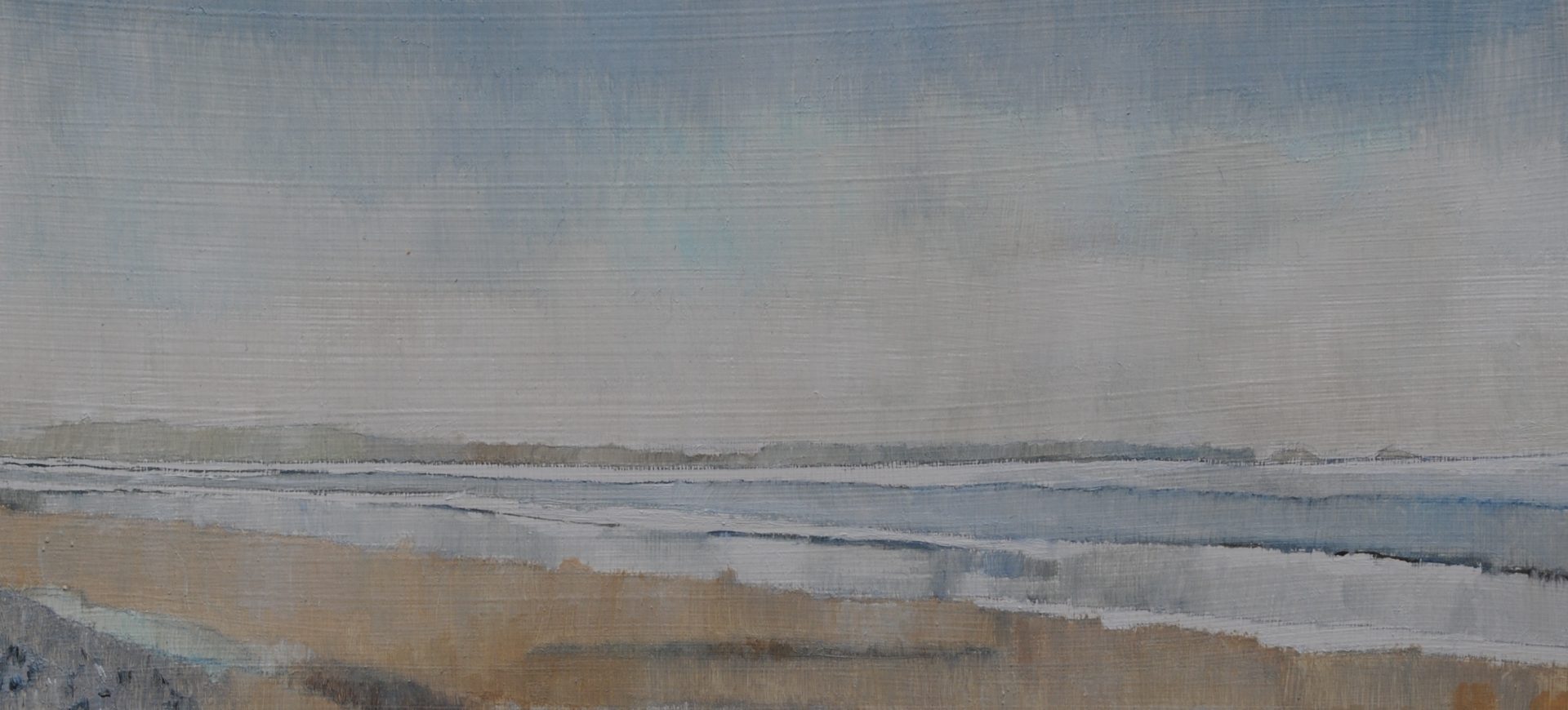
Comment and analysis by journalist Patrick O'Brien in tribute to Chartist leader, radical agitator and campaigning journalist James Bronterre O'Brien (1804-1864). BELOW: Ynyslas, Ceredigion, unscathed (see under Environment for pieces on highly controversial plan to excavate this spectacular unspoilt beach and erect an uglifying cast-metal effigy of a tree). Oil painting, 2019, by Nicki Orton

5 July 2020

LET’S CUT to the chase, courtesy of Nature magazine.

  As it points out, there’s strong evidence that the Covid-19 virus originated in bats. But how, it asks, did it get from bats to people? Researchers overwhelmingly think that it’s a wild virus, which probably passed to people through an intermediate species. But no-one has found the virus in the wild yet.

  So, scientists being scientists, around the world they’ve been in a flat spin running computational models, cell-studies and animal experiments to try to pinpoint the absolutely specific viral host that kicked off the pandemic.

  Unsurprisingly, tracking down the precise intermediate species involved is very tricky. As Lucy van Dorp, a geneticist from University College London (UCL), tells Nature: “It is quite possible we won’t find it. In fact, it would be exceptionally lucky if we land on something.”

  But in the midst of this investigative maelstrom, something stirs. It’s called, to be blunt, the bleedin’ obvious, a concept which, to the scientific mind, is usually inadmissible.

  But Michelle Baker, a comparative immunologist at the Commonwealth Scientific and Industrial Research Organisation in Geelong, Australia, doesn’t mind stepping out of line.

  Throwing off the scientific straitjacket, she sets the scene. It’s useful, she says, to know which animals are susceptible, to manage the risk that they might become virus reservoirs and possible sources of infection in people.

  Michelle then delivers the killer line: “But when trying to narrow down the culprit, it seems sensible to focus on those animals in close contact with bats.” Eureka!

  The ‘it’s staring you in the face’ moment is taken up by Peter Daszak, president of the non-profit EcoHealth Alliance in New York City, who has visited many villages, wildlife-markets, bat-caves and farms in southern China over the last 15 years.

  He says: “Animals at wildlife-farms in China are one of the first places to look. These farms stock many captive-bred animals, from civets to raccoon dogs and coypu – a large rodent – often living close to livestock such as pigs, chickens and ducks.”

  “These farms are usually wide open to bats, which feed at night above the pens, and some of which roost in the buildings. They are also usually linked to people’s houses so that whole families are potentially exposed.

  “The opportunities for these viruses to spill over across a very active wildlife–livestock–human interface is clear and obvious.”

  The way ahead is equally obvious: shut down, permanently, the wildlife-farms, thus eradicating a clear transmission route for viruses such as Covid-19, which has so far killed more than 500,000 people around the world and laid waste lives and economies on a vast and unprecedented scale.

Wildlife-farms: an abhorrent and brutal trade with lethal repercussions for creatures both beautiful and often rare, and for human health

Wildlife-farms have been operating in China on a vast scale. Nearly 20,000 of them have been raising species including peacocks, civet cats, porcupines, pangolins, ostriches, wild geese and boar, bamboo rats, snakes, toads and squirrels and, until about early February, the practice was still being promoted by Chinese government agencies  as an easy way for people in rural China to get rich.

  There may now be room for a chink of optimism. With general agreement that Covid-19 – as at 5 July the virus had killed 530,668 people worldwide and infected 11,241,655 – originated in wildlife including live wolf-pups, golden cicadas, scorpions and civets sold at the Huanan seafood wholesale market in Wuhan in early December, China issued a temporary ban (note temporary) on the wildlife trade to curb the spread of the virus at the end of January, and began a widespread shutting of breeding facilities in early February.

  In two provinces only, China is now offering wildlife-farmers a government buy-out. This would give people in Hunan and Jiangxi provinces, neighbouring regions in the southeast of the country, the opportunity to be compensated for switching to growing fruit, vegetables, tea-plants, or herbs for traditional Chinese medicine. Very much less welcome is the option to breed other animals, such as pigs and chickens.

  However, according to Humane Society International, the buy-out plan does not tackle the huge numbers of wild animals bred for fur, traditional Chinese medicine and the pet trade, the most valuable portion of the wildlife trade and worth an estimated $55bn.

  There is also concern about what will happen to the wild species if farmers go for the buy-outs. The proposal has three options – release of animals into the wild in suitable and non-residential habitats; utilisation by other industries such as zoos, laboratory research, and traditional medicine; or mass culling. Only the first of these is acceptable, and it would need to be diligently overseen.

  The impression is that a start may have been made to heading off the danger of a Covid-20, 21, 22 and onward coronavirus by means of a jump from an animal to a human. But enormous international vigilance and pressure remain essential, and at the moment there is precious little evidence of such. In the UK, for example, the BBC has evidently completely abdicated its responsibility in this direction.

  Reduced to its essence, the message remains: all the death and turmoil caused by Covid-19 is attributable to a small minority of people displacing, disturbing, killing and eating certain wild animals, and animals which came into contact with the wild creatures.

  If ‘we’ hadn’t intruded on their territories, wrecking their habitats, if ‘we’ hadn’t captured and caged and sold for meat the wild animals in question, none of this would have happened.

  But instead of ramming this fact into the public’s skulls – an imperative activity if theoretically endless new coronaviruses are to be avoided – too much of the UK print and broadcast media focuses almost entirely on sideshows: how many drinkers went on the razz in Soho on 4 July?; Leicester in a second lockdown; when should schools reopen?; should Dominic Cummings have gone on a day trip from Durham to the east coast?

  I’ve been a hack for 58 years. I find it sad therefore to say so many of my colleagues are doing us all a disservice.

SOME THINGS gnaw away at you. In my case, it’s the vital angle all but forgotten about in the saturation coverage of the coronavirus crisis.

  News outlets dispense practically everything you could ever want to know about Covid-19. Apart, staggeringly, from one thing – sustained delving into its origins and, even more importantly, on what must be done to prevent future, and similarly devastating, viral assaults. There, we meet an uncomfortable reticence.

  We know precisely what’s been threatening to bring Wales and places worldwide to their knees. Why our towns have been looking like soporific Sunday afternoons circa 1958; why the NHS is under terrible stress; why businesses are burning through cash reserves and could face ruin, and financial and job security sent reeling.

  The culprit’s familiar. Magnified, it’s the virus that looks like a mouldy orange pierced by bunches of tiny red flowers. So, assuming that familiarity will have bred contempt, why is there so little political and media interest in action to prevent future coronavirus variants we are warned are a distinct possibility? 

  The basics we know: severe acute respiratory syndrome (SARS), Middle East respiratory syndrome (MERS) and now SARS-CoV-2, the new coronavirus disease 2019, or Covid-19, have all sprung from viruses that have infected wild animals and evolved into new human coronaviruses able to spread like wildfire.

  But do not blame wildlife. We’re talking here about wolf-puppies, civets, porcupines, snakes, pangolins (fascinating scaled mammals resembling miniaturised plateosaurus dinosaurs). They didn’t ask to be rounded up and crammed, alive, into small cages before being killed for human consumption, and for putting in Chinese medicine.

The solid evidence is that the source of Covid-19 was the Huanan meat market in the city of Wuhan in China, where wild animals have been banged up after being plucked from their natural environments. 

  If they had simply been left alone, any viruses they may have been carrying would have posed no danger to human beings. Instead, this ghastly trade has turned wild creatures into a commercial commodity, and enabled virulent viruses to leap from animals to people.

  In February, to curb the spread of Covid-19, China temporarily closed its so-called wet markets, which trade in an array of wildlife, and other live animals. But, from the middle of April, almost incredibly, it started reopening the markets. For the time being, the ban on selling wildlife apparently remains. But that’s hardly likely to calm fears the wildlife trade will creep back in, raising the terrifying prospect of a repeat of the Covid-19 disaster. 

  There’s no argument. Permanent closure of these markets would help to end the terrible trading of vulnerable and precious wild animals, and at the same time protect people, their social settings and their economies from another viral epidemic or pandemic.

  So where are the voices that back a permanent ban? Where the linked debate on people’s pitiless encroachment on wildlife territory? Except marginally, mainstream news media and politicians say next to nothing. Last month, the US government called on China to permanently close its wildlife markets, a demand now echoed by the Australian prime minister.  

  But there is no sustained howl of exasperation, no uncompromising demand for a decisive end to wet markets trade in wild animals to head off a potential Covid-20, 21 and 22. Why? Because China is the world’s biggest money-lender, and people hesitate to bite the hand that feeds them? Because of an overwhelming desire to ‘get back to normal’, a normality which may be short-lived unless people start looking beyond the immediate?  Whatever, the raging indignation which should be caused by the deaths of hundreds of thousands of people, by the wrecking of economies and lives, is expressed by only a handful of niche and low-circulation publications. That’s surprising. After all, Grenfell Tower led to ultra-forensic investigations; sudden deaths are followed by inquests.

  Then there’s of course the bigger picture – the crying need for people to realise, once and for all, that the health of all life on the planet is linked. Deforestation and logging, for example, and agricultural expansion into undisturbed places, are not only unconscionable assaults on wildlife but endanger human health. Destroy forests and we chase wild animals from natural habitats and into contact with farmed livestock in unbalanced ecosystems, offering infectious agents the potential to run riot in human populations.

  The United Nations’ head of biodiversity, Elizabeth Maruma Mrema, puts it neatly: “The message we are getting is if we don’t take care of nature, it will take care of us.”

YOU MIGHT have thought that unquenchable anger and grief over the flooding of Cwm Tryweryn 58 years ago would at least have made Wales determined to never again let non-Welsh businesses exploit the country’s natural resources.

  But it hasn’t. 

  Water, then and now, is gushing out of the country with minuscule financial gain for Wales, while, increasingly, billions in profits generated by the country’s 40-plus windfarms are being salted away by their multinational owners. And Wales is doing little to stop it.

  The pain caused by the 1965 flooding of the Tryweryn valley, including the village of Capel Celyn, to create a reservoir to supply Liverpool will probably never go away.

  How astonishing therefore that, more than half a century later, the country continues to tolerate injustice over water despite the fact that, with climate disruption accelerating at the speed of a flash-flood, it becomes an increasingly valuable resource.

  In the case of water, there is now a real and present danger that Wales is on the brink of again being shafted, that, aided and abetted by sleepy politicians, the country will offer little resistance to now active proposals to export, by pipe or canals, vast quantities of water to drought-prone parts of England.

  The body advising the UK government on infrastructure challenges, the National Infrastructure Commission (NIC), has already announced that talks have begun aimed at diverting millions of litres a day to needy parts of England. Current selling price of such exports? A reported derisory 3p per 1,000 litres. 

  Bear in mind that any new outflow arrangement would be in addition to the 243 billion litres a year currently transferred from Wales to England. It’s therefore a vast disappointment that the plan now being hatched by Severn Trent and Thames Water has so far stimulated little, if anything, beyond rather meek demands for Wales to get a better price for this sought-after export, and for security of supply for the home market to not be compromised.

  In March, Adam Price, then Plaid Cymru leader, demanded that the Welsh government “should announce its intention to block the project until the benefits to Wales from an economic and environmental perspective can be conclusively shown.” Unsurprisingly, the Drakeford government did no such thing, and Price signally failed to push his point.

  Price also said: “At the very least we should receive a fair price for the export of our water, with the profits being used to invest in our communities, not to line the pockets of private companies that aren’t even based in this country.” It was a fair bar-room summary of the problem and underlined the redundancy of rhetoric detached from resolution.

  Clearly, the pressing need must be for an uncompromising political strategy that identifies water as a high-value, nationally-owned resource which water companies will no longer be free to sell across the border for virtually nothing and will from now on be a major contributor to Welsh public finances.

LARGE PARTS of rural mid and north Wales are plastered with wind-turbines, while across Wales as a whole the planning pipeline bulges with applications for about another 75 developments, some with turbines up to 250 metres high, or nearly five times the height of Nelson’s Column.

  Yet Wales is already a net exporter of electricity, using only about half the amount it generates. Forty per cent goes to England, where new onshore windfarms have been more or less banned since 2018. If the proposed installations go ahead, optimum wind capacity alone will be more than three times Wales’s own energy requirements.

  But, just as with water exports, the financial return for Wales is abysmally low, while aesthetically, and in terms of landscape protection, there are strong reasons for halting expansion.

  Previously uncluttered and ecologically important landscapes are invaded by industrial structures whose massive concrete foundations often detract enormously from the land’s role in soaking up high rainfall, lessening flooding risks. Service roads and sub-stations are ugly. All right, some people like the look of turbines, even I don’t mind the odd few – at a distance. But, overall, enough is enough.

  The bulk of Wales-resident windfarms are owned by overseas companies – German, Italian, Australian, Norwegian, Swedish, Irish.

  The biggest in Wales and England is at Pen y Cymoedd, near Aberdare, its 76 turbines owned by Vattenfall, a company owned entirely by the Swedish state. Profits from its Welsh operation feed into heating Swedish hospitals and schools, and supporting other public services. 

  Would that Wales benefited similarly. Instead, the country draws a pittance relative to the number and profits of foreign-owned windfarms rooted on Welsh hillsides and offshore. A few maintenance jobs, exceptionally meagre financing of ‘community funds’ compared with companies’ astronomical profits. Behold a cake most disproportionately sliced.

  The most recent wind proposal is for a major development near Ponterwyd that would spill down the southern slopes of Pumlumon to include Y Garn, the most southerly of Pumlumon’s summits, with a Bronze Age cairn. All is a special landscape area, part of the largest watershed in Wales, its soils a huge sponge for rainwater and carbon, and there is a site of special scientific interest. 

  A few environmental drawbacks there, then, but a safe bet for its would-be developers, Norwegian multinational Statkraft and Australian-linked Eco2. And for local economies no doubt the usual financial crumbs.

  The immediate and medium-term solution is for Cardiff to demand a commensurate share of Jeremy Hunt’s 45 per cent windfall tax on the “excess returns” of electricity-generating companies. That levy is scheduled to last until 2028. Time enough for the government to get thinking about longer-term rake-off strategies.

Press freedom’s encounter with inflated egos

WHY DID Ceredigion council waste public money by taking the time and trouble to submit baseless complaints about the Cambrian News to the Independent Press Standards Organisation?

  The immediate answer is because no-one at the authority apparently understood the nature of press freedom. They thought they had the newspaper cornered with their daft allegations of bias, and it took the regulator to point out to them how wrong they were.

  Press freedom in Britain was not won without much struggle and strife, and the council’s attempted assault on it, while ill-informed and so doomed to fail, nevertheless revealed an unhealthy hostility to freedom of expression.

  At another level, this episode is a reminder of how councils can labour under a basic misunderstanding about their identity and role.

  In a literal, but in no way demeaning, sense, they are public servants. Without local authorities, the organisation of society as we know it could not survive.

  Things go wrong, however, when public servants – elected and unelected – start to regard themselves in an inappropriately exalted light. Voters may then be denied proper democratic control because councils have fallen into the trap of seeing themselves as quasi private businesses built on assumptions of powerful hierarchies dismissive of public involvement.

  Press freedom can be all about countering such an undermining of democracy.

21 December 2023

ALARMED no doubt by the sheer ferocity of opposition to its mad plan to close all sixth-forms in the county, Ceredigion council goes into pass-the-buck mode and comes up with the very surprising claim that it didn’t write the review containing this insane proposal. As everyone had been led to assume.

  The ‘don’t blame us’ assertion is slipped into one of a sheaf of replies to questions posed by Frankly Speaking

  I’m told: “When you state ‘the council says’, please note that the review has been carried out on behalf of the council and not by the council itself.”

  Oh, really? So who did write it, and why can’t you volunteer the information, instead of waiting for us to make this the subject of a second question? Why indeed has the council kept the whole thing up its sleeve for so long? Presumably because it would have liked to take the credit for a strategy now totally discredited.

  The authors, we’re told, are two former head teachers – Huw Foster Evans, ex-head at Ysgol Morgan Llwyd, Wrexham, and Geraint Rees, formerly of Ysgol Plasmawr, Cardiff.

  Just that. The answer begs questions of obvious public interest but, this being Ceredigion council, nothing is volunteered.

  How much did the council have to pay for the Evans/Rees review?

  Was the full council involved in the decision to commission an external review, including its cost, or were these decisions taken by the cabinet alone?

  Did the authority ever consider doing the work itself, thereby, presumably, saving the taxpayer quite a lot of money?

  Three days after seeking answers, I’m told my inquiry is “being considered”, but I must wait another three days for a response.

  Earlier, the authority had accused me of inaccuracy in a piece a fortnight ago laying bare the potentially devastatingly damaging effects on post-16 students if it closes all sixth-forms.

  It is of course a plan that, at a stroke, would seriously diminish, and impoverish, the scope of learning currently on offer at Ceredigion’s comprehensive schools. 

  Instead, there could be a single so-called ‘centre of excellence’, probably in Aberaeron, posing a very likely insuperable problem for students living north of Aberystwyth, who would be faced with organising (or more likely not) their own transport for round-trips of up to 60 miles. 

  As even the council recognises, this inept blueprint would throw a grenade into Ceredigion’s post-16 organisation and be seen as threatening job-security and staff morale, as well as being bad environmentally because involving increased travelling for staff and students.

  So what is the council’s complaint? I wrote: “This insane proposal, waved through by the county council’s malleable cabinet, basically offers two choices, both unacceptable. Close some sixth-forms. Or the whole lot.”

  Not so, I’m told in an unsigned email from the authority’s press office. I’m chided for not mentioning a feasibility study schools have been told to carry out, looking at, yes, closing all the sixth-forms. Effectively, therefore, looking at betraying up-and-coming potential sixth-formers, the pupils teachers have been nurturing, A-levels and universities in mind.

  Yes, the council complains, but you didn’t mention the other option we have our eye on – that of “developing the current situation”. And what would that look like?

  It would mean post-16 provision continuing, for the time being, at all six schools. But it would see current school governors “surrendering…post-16 responsibilities to a Strategic Board.” Whether such a board would be elected or not is unknown, the council admits. But this body “could, over time, recommend a reduction in the number of sites and what is provided at each site.” In other words, all sixth-forms could be axed.

Maybe not the way to stem second homes glut

OF TWIN Welsh government initiatives aimed at making it easier for people to buy and rent in their home towns and villages, one will certainly succeed. The other is problematic.

  The success story is going to be the £50m national empty homes grant scheme launched earlier this year, which offers up to £25,000 per building to pay for improvements to bring places back into circulation.

  This strategy is operated on the government’s behalf by Rhondda Cynon Taf council, which has brought 922 empty homes back into use, through this and other schemes, since 2017.

  But its benefits spread to rural west Wales. In Gwynedd, where local people are routinely and depressingly priced out of the housing market, the council has intervened to itself buy houses that are then affordably rented to local people. In addition, through the empty homes scheme, 116 individuals – at the last count – have been able to bring 50 empty houses in the county back into use.

  Less clear-cut in certainty of benefit are evolving radical measures giving councils in Wales extra powers designed to stop a preponderance of second homes gouging the life out of too many rural, and particularly coastal, parts of the country. Councils are now busy exercising new, and newish, powers to dramatically increase the amount of council tax that second-home owners must pay. 

  But they will also be able to bring in changes to planning rules to make it harder for houses and flats to be bought as holiday retreats. Three new planning use classes – primary home; second home; short-term holiday accommodation – mean councils will be able to amend the planning system to require change-of-use consent from one class to another.

  In Ceredigion, a report following public consultation recommends a 100 per cent  council tax premium on second homes from April next year, with a second rise to 150 per cent in April 2025. 

  Just under 1,700 properties in the county – out of a total of 33,856 – are second homes, most being on the coast. New Quay accounts for 27.2 per cent of the total, followed by Llangrannog, Borth, Pontarfynach, Penbryn, Aberseron and Aberporth.

  So what’s the theory? A second-home owner rebels over the council tax premium and decides to sell up. Do they pitch the asking price at an amount affordable to a first-time buyer living locally, or rebel for a second time and keep it high? Somehow, this second seems more likely, especially if the owner feels indignant at being eased out.

  Will this leave the house empty – and completely wasted? Will it eventually be bought by another rich weekender from outside Wales? Certainly, any spending by occasional occupants will in the meantime be lost to local economies.

  Will the house in question be snapped up by someone intending to rent it out as a holiday home at £900 or more a week, more at bank holidays (destructive dogs welcome)? Unless they’re clobbered by the new change-of-use consent rule, they’ll just tack punitive tax premiums onto the rent.

  So, much uncertainty about whether stinging the rich will free up houses desperately needed by the poor.

Backyard boom for the casual slur

CALLING someone a nimby is a divisive denunciation that can easily generate ill-will on either side of an argument. As a basis for calm discussion, it’s a non-starter. 

  So it was a pity to see Chris Simpson, one of Ceredigion’s enduring Green voices, hare off down this rhetorical blind alley in a Cambrian News letter last week. 

  Going for the jugular, he labels as “a bunch of nimbys” a whole swathe of people living on the Waun in Aberystwyth because they oppose the threatened swallowing up of that area’s one remaining sizeable and publicly-owned green space by a proposed county council-backed housing estate.

  All the residents want is preservation of Waunfawr’s Erw Goch field as a valued recreational area, which is what it’s been for decades. That necessarily involves opposition to surrendering the site to bricks and mortar. 

  They’re not, however, driven by a blinkered, indifferent not-in-my-back-yardism. Their motivation is precisely the opposite. In demanding preservation of a rare open green space, they’re putting forward the interests of an entire local community.

  Chris is also critical of Frankly Speaking, my column in the Cambrian News. He says he thinks I’ve been “bamboozled” by the protesters. No, all things considered, I see their case as unassailable. 

8 December 2023

IF YOU’RE a student in Gwynedd heading towards GCSEs and fancy going on to higher education you won’t be stuck for somewhere to take A-levels. All the county’s seven comprehensive schools run sixth-forms.

  In Powys, 11 of 12 secondary schools have sixth-forms. Of Carmarthenshire’s 12 secondaries, eight offer sixth-form courses; in Pembrokeshire, five of six comprehensives do the same.

  Then there’s Ceredigion. For now, there are sixth-forms at all six secondary schools. But maybe not for long. Because if a hare-brained, and frankly callous, county council plan is allowed to gain traction, there may soon remain not a single sixth-form across the entire county.

  This insane proposal, waved through by the county council’s malleable cabinet, basically offers two choices, both unacceptable. Close some sixth-forms. Or the whole lot. 

  This second would mean that, at a stroke, hundreds of Ceredigion teenagers a year could lose out on higher education, putting a blight on their intellectual, cultural and social development and seriously undermining career prospects. 

  The repercussions could be life-changing. Futures full of brightness and hope could be snuffed out, to be substituted by pinched existences and foreshortened horizons.

  The council’s reckless alternative to the shut-’em-all plan? Establish a grandly-named and vaguely described ‘centre of excellence’, which would be outside the council’s control and probably located at Ysgol Aberaeron. According to a council report, this option is supported by chief executive Eifion Evans. This may cause some hearts to sink.

  The report, however, concedes that such seismic undermining of the present system would “destabilise Ceredigion’s current post-16 organisation” and – let’s hope this turns out to be the case – “could create significant local opposition”.

  It adds that “staff and unions could see this option as one that would threaten job security and morale. That could create significant uncertainty in the schools.” As a statement of the obvious, this can’t be faulted.

  For post-16 students living any appreciable distance from Aberaeron, especially north of Aberystwyth, centralisation in south Ceredigion would make further study impossible. The effective abandonment of such pupils would be the greatest single indictment against a plan in any case heartless and without caring for young people’s futures.

  The council pleads poverty. Post-16 schooling, it claims, costs more than it can continue to afford, the £3.7m it gets from a Welsh government grant for that purpose being about £1.5m below what’s needed. “All but one school in Ceredigion have to use core 11-16 funding to varying degrees to maintain their sixth forms”, the report says. 

  This from an authority with a current year revenue spending budget of £224.2m, a £23.3m increase on 2022-23. An 11.6 per cent rise that is the second highest – after Gwynedd – among the five west Wales counties. 

  The others all find their sixth-forms affordable – why doesn’t Ceredigion?

  Council spending based on population is far lower in Carmarthenshire, Powys and Pembrokeshire than in Ceredigion, but they all manage to pay for post-16 schooling. 

  Why can’t Ceredigion make ends meet?

  One peripheral reason may be that numbers of Ceredigion sixth-form students fell from 535 in 2014-15 to 390 in 2020-21, which in 2022-23 resulted in a £273,000 (7.05 per cent) cut in Welsh government funding for post-16. Clearly, this reduction could be only a temporary setback, though the council’s effective vote of no confidence in the future of sixth-forms will do nothing to encourage students to stay on.

  But another, far bigger, reason is the millions paid out every year in interest on accumulated council borrowing from the Public Works Loan Board, a lending facility for local authorities for capital projects.

  Latest figures, from June, show the authority with total outstanding debts of £107,811,980 from 40 loans taken out between 1971 and 2020. 

  In 2022-23 alone, £4.638m was paid out in interest on external borrowing, £510,000 less than the £5.148m budgeted for.  

  So here’s a happy coincidence. The sum the council calls a “favourable variance” more than matches the £408,519 it estimates to be the current year’s shortfall in the government’s sixth-form grant. No need for them to worry about plugging that gap, then. 

  Is this the way forward? As with this year, the authority may like to fix a debt interest budget that’s on the generous side, and use the surplus  to supplement the sixth-form fund.

  This may be seen as a frivolous suggestion. On the other hand, is it any less sound than decisions over expensive capital loans whose legacy may be the current very serious threat to the futures of hundreds of Ceredigion school students?

  Think Canolfan Rheidol, the £16m white elephant suite of council offices which echoes with the absence of its hundreds of now home-working staff. A dodgy enterprise from the start, hatched in 2007 behind closed doors, launched without public consultation. 

  This column has for some time been asking the present administration how much was borrowed to build and equip it, and how much debt remains. It has refused to say. A freedom of information request – which shouldn’t be necessary – looks inevitable.

Red benches beckon Dog and Duck landlord

IF THEY have a spare moment, Welsh MPs may like to ask Rishi Sunak whether he sees Britain’s unwritten constitution as endlessly obliging when it comes to bypassing voters in his selection of members of the cabinet.  

  I make the suggestion only because I think it would be fascinating if the prime minister told us how – or more likely if – he attempts to justify appointing as foreign secretary a member of the public who is not an MP and whose suitability to hold one of the great offices of state has in any case not been even remotely the subject of public discussion or assessment.

  At the same time, I’m assuming we’d all like to know how – or more likely if – Sunak may try to justify David Cameron’s appointment via the staggeringly disreputable route of the overnight invention of a peerage, while presumably at the same time hoping to curry favour with voters in the run-up to the general election by bringing on board a leading enabler of Brexit.

  In this last, the prime minister will prove himself an inept strategist. Does he really think people will have have forgotten about Cameron’s capitulation to the rabble-rousing anti-Europe hysteria orchestrated by Nigel Farage and the consequent referendum he never wanted and went on to lose, to Britain’s huge economic disadvantage?

  Equally, he surely can’t believe memories are so short that everyone will have forgotten that the austerity programme introduced in 2010 by Cameron and George Osborne, following the 2008 financial crisis, not only targeted the poor and disadvantaged but probably prolonged the recession. (Historical note: 75,000 disabled people had their Motability cars taken away because of tightened benefit eligibility.)

  Following’s Cameron’s precipitate elevation, one question now is whether, emboldened by his bypassing of the electorate, Sunak will perhaps be considering pushing the boat out and having a complete cabinet clear-out, replacing present incumbents with, amongst others, a couple of farmer neighbours in his north Yorkshire constituency, the chap who did such a fine job reroofing his country house and the landlord of the Dog and Duck in Pickering. 

  Is he sensing endless scope for constitutional extension and renewal, together with a gratifyingly enormous saving in time and energy compared with the present slow, tiresomely circuitous and often controversial process of constituency-focused candidate-selection?

  Appointments to cabinet, Sunak may well be concluding, are too important to be left to decisions involving the great unwashed. 

  In any case, he may reason, the Commons’ present cramped seating arrangements could at any moment become a matter of investigation by the Health and Safety Executive if numbers aren’t thinned out, while it’s obvious from television coverage of the Lords that there’s acres of room left on the red benches.

24 November 2023

WHEN THE barbarity of Hamas is duplicated by an important economic partner and strategic ally of the West, be unsurprised that Rishi Sunak has had nothing much to say about the deaths of Gaza civilians beyond that Israel has a right to defend itself.

  Yet there is something unconvincing, an incompleteness, in mainstream explanations for his refusal to back a ceasefire, for his unquestioning loyalty to Israel. 

  Of course, there will be his fear of losing the UK votes of supporters of Israel and of its current hard-right government, particularly in a general election. And there is the Tory party’s historically lukewarm interest in human rights and justice issues.

  However, a more persuasive explanation for his unwavering support for Israel seems likely to be something on which news outlets have been jarringly silent since last month’s terrible Hamas attack. Notably the BBC, because of their theoretically special relationship with the British public.

  It’s almost inconceivable that any serious analysis of the Tory leadership’s rock-solid  ‘we’re backing Israel’ position would not have found itself confronting a new, and major, UK-Israel defence, security and technology agreement signed earlier this year, and designed to build on an existing trading relationship with Israel worth £5 billion. It’s a deal hardly anyone is aware of.

  International trade agreements may not make for the sexiest news stories. But in the post-7 October political context this particular pact becomes of irresistible relevance. The fact that news organisations, and in particular the BBC, have diligently ignored the slightest reference to it since the Hamas attack raises a range of questions, not least rather serious ones about the orientation of news-management.

  Before the latest Hamas-Israel conflict, the UK’s Department for International Trade raved about the merits of this new agreement, and pointedly referred to a British bounce-back following Brexit.

  It would “build on the current UK-Israel Trade and Partnership Agreement, which replicates the scope of existing trade agreements between the EU and Israel”, it said.

  “Israel’s economy” it added, “is growing rapidly, with its service sector growing by 45 per cent over the last 10 years. A new (agreement) will allow us to take advantage of this growth, generating ever more opportunities for UK firms to export their goods and services…”

  And: “The UK is proud of its deep and historic relationship with Israel. As open, innovative and thriving economies, the UK and Israel are close allies and strategic partners.” 

  Since then, not a word. After all, Rishi Sunak would hardly want to upset the apple-cart. But neither did he, nor his media allies, want to say anything much to complicate the government’s simple narrative about Israel having the right to defend itself.

  And the public’s right to the full picture? As Sir Humphrey, of Yes Minister fame, might have said: “It’s not our job to clutter up people’s minds with things they really don’t need to know.”

Then Blunkett lets the cat out of the bag…

DO NOT squint in disbelief when Keir Starmer says a humanitarian pause in Gaza is “the only credible approach that has any chance of achieving what we all want to see in Gaza – the urgent alleviation of Palestinian suffering.” Do not make the mistake, he would have us believe, of thinking that a ceasefire would better alleviate the agonies of civilians tormented, killed, horribly wounded, their lives torn apart, by bombing and artillery shelling.

  Instead believe these non-combatant victims would prefer just a lull in death and destruction, that they are so used to mass bloodshed they would positively welcome a return to mayhem after a few hours, a couple of days, of relative peace. Don’t we all hanker after continuity in our lives?

  In choosing his words with precision, Starmer ties himself in knots unknown to even the most logically-minded of boy scouts. A ceasefire, he argues, would leave Hamas’s infrastructure intact, enabling them to carry out future attacks. This is speculation. It is not speculative to state that an end to bombing would save the lives of civilians who, under the laws of armed conflict, should have been left unscathed.

  Then, careless of Keir’s plausible guesswork, along comes David Blunkett and lets the cat out of the bag. The former Labour home secretary tells us Starmer is right to align himself with the prime minister and with British allies in calling for “humanitarian pauses” to allow aid into Gaza, rather than a ceasefire, because it showed the party was a “government in waiting”. 

  So there we have it. Align yourself with all the right people and you’ll win the election. On the way, Labour averts vitriolic attack by the Daily Mail, thereby hopefully retaining the invaluable votes of the Israeli camp.

Absurdity comes with a sea view

FOR A stunning example of legalistic absurdity look no further than the case of Erw Goch.

  For decades, this stretch of open land above Aberystwyth has been of great importance as a recreational green lung for people living in the intensively developed suburb of Waunfawr.

  With its sea views and rich bird-life, it’s a place to unwind, to recharge, to take stock. Generations living nearby have used it for exactly that. The function of this stretch of publicly-owned semi-wildness is therefore well and truly established. 

  The fact that more than half a century ago it was vaguely earmarked by the then Cardiganshire County Council as a site for a school has long been irrelevant. It was never used for the school in question – Ysgol Penweddig – which ended up way off down the hill.

  Perversely, however, Ceredigion council’s cabinet is trying to cling on to the notion that this hilltop remains available only for “educational use”. 

  Both sides in the protracted dispute over whether the land should be declared a village green, and thereby saved from being concreted over, know this tag has for many years been a meaningless label which ignores the reality that the disintegration of this entirely non-formalised designation began when Penweddig was built elsewhere, and continued in the 1990s when part of the Erw Goch land was snipped off to allow construction of Hafan y Waun care-home.

  The facts speak for themselves. But, almost neurotically, Ceredigion council has now squandered £40,000 of badly needed public money on seeking outside legal advice that would confirm its quite unreasonable contention that the “educational use” condition survives. 

  Lawyers, apparently manipulating legalistic argument to the point of strangulation, have now claimed just that. It’s a verdict that of course works both ways, that leaves neither side victors. 

  If “educational use” is ever confirmed, it may end up blocking residents’ wish to have the land designated a village green.

  Equally, it may stymie the cabinet’s stubborn attempts to usher in the 70 houses they, with a housing association, are pushing for.

  Which raises the question of what possible purpose did those on the council backing development – in defiance of a clear community wish for a village green designation – think would be served by seeking external legal advice? Always, the outcome was perhaps predictable: they would be deposited up a blind alley helpful neither to them nor to backers of a village green.

  A full meeting of Ceredigion council has now unanimously rejected the rather odd findings of the authority’s outside lawyers. 

  The councillors’ rebuff should signal the end of the affair. Logically and democratically, the only proper way forward is for the application for village green status to succeed, and for the entirely phoney “educational use” plea to be slung into history’s shredder.

  Consequently, it’s unacceptable that the council’s cabinet is apparently refusing to accept the full council ruling. Worse, they now risk provoking a constitutional crisis by announcing their intention to “go away and seek further advice”. Which, apart from turning democracy on its head, would entail a further spending splurge at a time when council budgets are as stretched to breaking point.

  In a refreshing and unusual assertion of their overriding authority, the full council has defied those who, mistakenly, regard themselves as being in the driving-seat.

  Faced with this solid opposition, the cabinet is now devoid of any possible mandate to carry on trying to push through their housing plan. Ploughing on regardless, which is their intention, will be to stray into a land democratically unauthorised and uncharted.

11 November 2023

PEOPLE in charge of important public meeting-places need to be able to think straight. If they can’t, they need to make way for people who can.

  That must be the conclusion in the case of Borth Community Hall Committee, who have made it pretty obvious that the power of reasoning is not their strong point.

  This foggy-brained body has banned a charitable event at the hall in aid of Palestinian women, men and children enduring agonies for want of food, water, medicines and shelter. They accuse the organisers of showing political favouritism.

  What silliness is this? Almost incredibly, the committee have shown themselves incapable of recognising the overwhelmingly pressing obligation to ease desperate human suffering in Gaza, and to recognise that this imperative blots out considerations of political evenhandedness.

  The day-long programme of entertainment on which they’ve put the kibosh would have raised money to buy medical and other life-saving equipment for people who, as organiser Alex Harwood puts it, are “caught up in extreme violence and war through no fault of their own.”

  The committee, through its chairman, Ray Quant, says that to assemble help specifically for Gaza’s destitute and dying Palestinians – rather than for them and for Israelis – would show political bias.

  An email from him to Harwood says: “Our view is that with the present conflict we don’t want it to be ‘perceived’ that the hall committee is promoting one of the protagonists.”

  This is muddled thinking of the first order. For nearly a fortnight before the decision to refuse use of the hall, the United Nations, aid agencies and reporters had spelt out with heartbreaking clarity the dire predicament of up to two million Palestinians.

  Of course Israel has suffered dreadfully as well but, following the murderous Hamas assault, vast numbers of Israelis have not been clinging on to life (or not) for want of basic necessities, as have been countless citizens of Gaza.

  Israelis have suffered grievously as a result of the sickening Hamas attack. but, unlike Gaza’s Palestinians, they have not been at death’s door for lack of food, water, medicines, fuel and shelter. 

  Harwood and her colleagues are not being politically selective. They merely wish to help those in greatest need. 

  The hall committee’s staggering failing has been to not recognise – instinctively, you would have hoped – a simple humanitarian imperative. To not see the crying need to single out help for the homeless, the hungry and the thirsty.

  Instead, this committee has seen to it that humanitarianism has been usurped by irrationality. 

‘Freedom of speech’ – but check with us first

MORE CHAOTIC thinking – this time from Maria Hinfelaar, vice-chancellor of Wrexham University.

  She tells a visiting psychology professor he has a right to freedom of expression – then sacks him after he exercises exactly that liberty.

  Nigel Hunt, from Nottingham University, said on Facebook he thought bilingual road-signs could be dangerous for drivers who didn’t understand Welsh.

  Maria tells him there have been “several complaints” about his social media posts, with the university being tagged more than 100 times online. Oh dear.

  She adds: “The university acknowledges you have the right to freedom of expression. However, we consider that the affiliation to our university within the media posts has brought our name into disrepute. Therefore a decision has been taken to withdraw your visiting professorship association forthwith.

  Dear Maria, you’re talking rot. ‘Freedom’ of expression which comes parcelled up with the penalty of losing your job isn’t freedom to say what you think but a strong incentive to keep your trap shut.

Keep on walking – it’s your promenade

CEREDIGION council’s Let’s Foul-up Aberystwyth Committee continues on its wrecking way.

  Demonstrating indifference to multiple warnings that its proposal to make people pay to park on the seafront would threaten the survival of promenade cafés and town centre shops already struggling to survive, it now rubs salt in the wound with its admission that buying ticket-machines and signs and painting parking bays would cost a not inconsiderable £150,000. Oh, yes, plus an undisclosed sum to take on extra traffic-wardens – let’s say another £60,000 to £100,000.

  This council needs to be very careful. Ceredigion ratepayers as a whole are already fuming over an authority which repeatedly squeezes them financially while not hesitating to increase councillors’ pay, and tipping stratospheric salaries into the pockets of senior officials. 

  Aberystwyth has particular reason to feel aggrieved. While overall council tax rose this year by 7.4 per cent – the second highest in mid and west Wales – the town has borne the brunt of the hike, ratepayers there in receipt of bills of around £2,000, higher than anywhere else in the county.

  People there will not tolerate a further financial raid in the form of parking charges on parts of the promenade where parking has always been free.

  This seafront has always been central to the outdoor lives of people living in Aberystwyth and the surrounding area. 

  This is where generations have always walked, have always chatted to each other, have sat and watched spectacular seas and skies, have socialised at outdoor cafés. 

  This is their place, their seafront, and they will not capitulate to any attempt by the council to impose parking charges or petty time restrictions. It’s as simple as that.

Hoarding and breast-beating at national library

THE National Library of Wales announces its intention of becoming “an actively anti-racist organisation”.

  Beating its breast, it says black, Asian, mixed-race and minority ethnic people have been underrepresented in Wales’s heritage and culture. 

  While colonialism “placed Wales at the centre of systems that created the structural racism and inequality that still exist in our society today.” What exactly they mean by that

we’re left to try to work out.  

  Accordingly, the library has commissioned four artists – Joshua Donkor, Jasmine Violet, Mfikela Jean Samuel and Adéọlá Dewis – to come up with new works “in response to the library’s collections, whilst facing some difficult or challenging aspects of history.” More guesswork there.

  It is all laudable. If slightly woke-heavy.

  The only snag I foresee is that the new works will presumably soon go the way of the great bulk of the library’s artistic brilliance and be slotted into racks deep in its storage rooms. Rarely, if ever, to be seen again.

  Yet again, the library needs to be pressed to open up. Making works of art available online is just not enough. People want to see the real thing. After all, we’re talking here about publicly-owned art, works which, if they were on view, would spice up lives and generate touristic income.

  This great institution would like increasingly to be seen to be at the forefront of Wales’s cultural life. Hoarding is really no way to make that happen.

25 October 2023

WRITING about something genuinely alarming carries a risk – that you’ll be accused of being alarmist.

  Never mind. Because, really, who is going to argue that a political manoeuvre that holds out the threat of imprisonment, or a £15,000 fine, for property-owners not sticking to proposed new energy efficiency rules is anything less than alarming? 

  Who would not agree that such a threat is just about the very worst, the most draconian, the most outlandish excess ever to be dreamt up by any UK government?

  This, though, is the nasty little surprise lurking, largely undiscovered by the outside world, in the depths of the Tories’ purportedly wholly benevolent and environmentally enlightened Energy Bill, currently ping-ponging between the Lords and the Commons.

  This measure holds in reserve ministers giving themselves powers to create criminal offences and increase civil penalties as part of the drive to hit net zero targets. 

  Under the proposals, people who fall foul of regulations over energy consumption could face up to a year in prison and be fined up to £15,000.

   A clause in the bill sets out the government’s ability to establish “sanctions” to enforce any “energy performance regulations” which may be established. Such rules would almost certainly relate in part to compulsion over installation of smart meters and the multiple ramifications over the potential for remote controlling of domestic electronic devices.

  Sounding like the raspings of a despot, the clause states that these sanctions may include “the imposition of civil penalties” (fines) not exceeding £15,000 and “the creation of criminal offences” attracting a maximum prison term of 12 months.

  The bill provides for “the creation of criminal offences” where there is “non-compliance with a requirement imposed by or under energy performance regulations”. People could also be prosecuted for “provision of false information” about energy efficiency or the “obstruction of… an enforcement authority”.

  The bill also replaces and strengthens rules on energy performance certificates, which are required whenever a home is bought, sold or rented out and were previously based on now repealed EU law.

  The fear is that the plans would lead to the criminalisation of homeowners, landlords and businesses.

  But there’s cunning afoot, in the best traditions of behind-closed-doors government. While, if passed, the bill would give the UK government the power to establish such offences and set out fines and prison terms, it would not itself create any new offences, or result in people facing fines or being sent to prison for not complying with existing regulations.

  Accordingly, energy minister Andrew Bowie was able to tell the Commons on 5 September: “I can categorically guarantee before the House that we are not creating new offences.”

  Indeed they aren’t. Instead, any new offences created using powers set out in the Energy Bill, once passed, would be brought into being using secondary legislation, which usually takes the form of a statutory instrument. They do have to be approved by the Commons, but they are typically nodded through, and none have failed to pass in the last 35 years.

SO WHY is this madness attracting so little public attention? And is Wales going to be sucked into compliance with an oppressive regime of controls delineated ostensibly by concern for the planet but in reality infected by a dangerously authoritative zealotry?

  Few MPs have spoken out publicly against these very disturbing proposals. Those who have are Tories who have said they are alarmed that ministers would be able to create new offences with limited parliamentary scrutiny.

  One is Craig Mackinlay, head of the Net Zero Scrutiny Group of Tory MPs opposed to some net zero policies. He has tabled an amendment to strip the “open-ended and limitless” powers out of the legislation. He told The Daily Telegraph: “The Bill is festooned with new criminal offences. The ones we’ve found most offensive are where a business owner could face a year in prison for not having the right energy performance certificate or type of building certification.”

  Welsh MPs have been worryingly silent on the issue. So what, for example, does Ceredigion’s Ben Lake think?

  He told me: “The Energy Bill contains a number of welcome provisions that will help to enhance energy security. However, it would also empower the government to establish, through secondary legislation, new offences for non-compliance with energy performance regulations punishable by fines or indeed prison terms. 

  “Ministers have stated that there are no plans to include these powers in the Energy Bill, and any new offences would need to be considered separately by Parliament. Nevertheless, although it is important that there are sanctions in place for developers of new housing who fail to comply with new regulations, it would be disproportionate in the extreme to apply the maximum penalties to individual homeowners. 

  “I believe that MPs should ensure that homeowners are safeguarded should the Government seek to introduce such secondary legislation in the future.”

  Actually, it would be wholly disproportionate to jail anyone at all for a transgression over energy policy. This would be an expression of government by extremists.

  Meanwhile. the Senedd is currently withholding its consent to the Energy Bill because it is being denied control over proposed new regulation-making powers linked to low-carbon heat schemes and heat networks in Wales, and concerns over the scale of carbon-capture, usage and storage in Wales.

  These are devolved issues, and constitutional convention is that the UK parliament will not normally legislate over things in that category without Senedd consent. However, the energy minister, Julie James, believes the bill may be pushed through without Senedd agreement on the disputed clauses and is seeking an assurance that, if that happens, Wales will be excluded from the legislation altogether.

  Exclusion may now be unavoidable and would by no means be a negative outcome. Broadly, energy is a devolved responsibility, but it’s clear the UK government is content to shove that consideration aside when it comes to implementing policy in the Energy Bill.

  Such an imperious attitude can’t be allowed to prevail. Merely consulting Wales on a piece of planned legislation of such magnitude is far from being enough, especially when the commitment is for the necessity of agreement.

  Whether, in the end, an overall partnership with Westminster on energy will or won’t be possible, there is an immediate overwhelming priority. 

  This is that the Senedd urgently becomes aware of the absolute necessity of lifting the threat to the people of Wales of the outrageous prospect that they could be fined or imprisoned for less than total solidarity with UK net zero ambitions. This a threat that simply must not be tolerated.

10 October 2023

CEREDIGION council has dreamt up what it thinks is a very good idea. It has formed a Let’s-Do-Everything-to-Foul-Up-Aberystwyth Committee. Already, this new task-force have had a brainwave.

They’ve worked out how they can likely deal a terminal blow to a good few of the town’s shops, cafés and restaurants, while at the same time enraging residents by ending an age-old right to free and unfettered enjoyment of Aberystwyth promenade. 

The businesses are those struggling to survive in the face of a withering triple assault from the cost of living squeeze, the seemingly unquenchable onlineshopping mania and the craze among office-staffs for working from home in pyjamas and dressing-gown with a dog as foot-warmer. 

  The idea – a particularly bad one – is to make people pay to park on a long stretch of Aberystwyth promenade where waiting has always been free. 

It’s a proposal blinkered and short-sighted, a thought-free plan powered by a ludicrous display of tunnel-vision. The maximisation of parking revenue is being viewed in total isolation – without a thought for the inevitable negative effects on the wider local economy.

Extract every last extra pound from motorists – most of them payers of Ceredigion council tax – and damn the consequences if that results in exasperated drivers deserting the town, and shops, cafés and restaurants – quite likely already teetering on the brink of viability – closing down.

  Never mind the repercussions for people and jobs, for the chances of maintaining for Aberystwyth even a vaguely buoyant, never mind dynamic, air. 

  This obey-us-or-be-fined committee shows not the slightest awareness that demanding money from people who may simply want to pause briefly for a short walk, or to take in the sea view, could well put them off coming to the town at all, resulting in streets even emptier than they often already are, and causing a further slump in shopping activity.

  In short, it’s a plan destined to make lives miserable and the economy turbulent. 

  People have always had the right to walk along the promenade without paying for the privilege, and without clock-watching for fear they’ll fall foul of a traffic-warden. For heaven’s sake, they say, leave us alone, spare us your control-freakery. We demand to be left in peace to wander by the sea, along our promenade, and to perhaps stop for a cup of something and watch the world go by.  

  For Ceredigion council tax-payers especially, this is a right the authority has no moral jurisdiction to end. 

  Officially, the people behind this proposal are on what’s ironically named the thriving communities committee. Allow yourself a chuckle over this misuse of language – Aberystwyth will hardly thrive if it’s variously being commercially destroyed, stripped of a basic right and eyed up by bossy councillors intent on raiding personal bank accounts.    

  Yet we have been here before. Nineteen years ago – and without public consultation, yet alone consent – the council declared the road between the harbour and the wooden jetty, which had always been open highway, would henceforth be a paid-for car-park. The place is now an ugly jungle of poles and notices, warnings and prohibitions.

  Now they’re trying it on again.

Morgan makes equality of NHS access a sick joke

IN A reassertion of the ridiculous, health minister Eluned Morgan persists with her daft insistence that people in Mid Wales are perfectly relaxed about having to trek to the other end of the country to access an early-warning clinic for patients suspected of having cancer. 

  Hywel Dda health board was told by the government 23 months ago to set up so-called rapid diagnosis clinics (RDCs) and, crucially, to guarantee easy access to this innovative service regardless of where patients live. 

  It has failed dismally to deliver on that instruction. Since October 2021, just one such clinic has been set up – at Prince Philip Hospital, Llanelli, a 120-mile round trip from Aberystwyth and much further than that for numerous other towns and villages north and east.

  Yet RDCs are invaluable. At the end of a single day at such a clinic, patients will get results of tests and a likely diagnosis, together with a referral to a specialist, a plan for more tests or reassurance if results are normal.

  Eluned Morgan is thus presiding over a system which ensures nothing even faintly approaching equality of access.

  Ceredigion MS Elin Jones strongly backs this column’s demand for an RDC to be set up at Bronglais Hospital but is being stonewalled by the health board and the minister.

  Morgan tells her: “I understand your concern about access and travel arrangements to the rapid diagnostic centre in Llanelli…An RDC provides an additional referral option for GPs when a patient does not meet the criteria for suspected cancer referral, but the GP still suspects cancer.

  “Evaluation shows them to be very popular with patients and I find it to be the case that patients are prepared to travel for a much better service such as this.”

  This latter point is patent nonsense. To the extent that patients are “prepared to travel” it will be because they have no choice but to spend an arduous day getting to Llanelli from northern Ceredigion, southern Gwynedd or western Powys. Such a journey will be possible only if they have a car, or a friend or relative prepared to ferry them down to South Wales and back. Many patients are too poor to run a car, and public transport may well either be too costly, or impractical because neither bus nor train will get them there and back in a day.

  Is the health minister really so out of touch as to be oblivious to such predicaments?

  At the same time, in referring to the “much better service” offered by an RDC inaccessible to countless numbers of patients, she effectively admits that she thus presides over a classic postcode lottery in which the losers are penalised because they happen to live in rural Mid Wales.

  Morgan must urgently turn her attention to 2015’s Well-being of Future Generations (Wales) Act, which guarantees collective human rights. Without doubt, failure to ensure the establishment of a rapid diagnosis clinic at Bronglais Hospital flies in the face of this landmark legislation.

Meek and mild councillors bow to CEO diktat

WILL Ceredigion county councillors ever assert themselves? Will they ever find the courage to shake themselves into the realisation that they were elected to lead, not to meekly accede to the preferences of the council’s chief executive?

  Recent evidence is not encouraging. It’s frankly alarming that most councillors deferentially obeyed a command from CEO Eifion Evans to attend a mandatory meeting following protests by members dissatisfied over inadequate lines of communication between them and council officials.

  To hear of councillors describing this enforced meeting as comparable to “being brought in front of the headmaster” is toe-curlingly embarrassing. Have these elected members surrendered all dignity? Why did none of them apparently have enough gumption to point out that it’s not a function of the chief executive to lord it over members, that any such meeting should properly have been called not by an official but by the leader, or chair, of the council? Why this spinelessness?

  It would be futile to try to argue seriously that electronic or phone communication between councillors and officials, and between the public and officials, are just as good as face-to-face contact. They aren’t, and to pretend they are won’t solve the problem. Yet quality of communication is vital for any authentically democratic council.

19 September 2023

THE revelation – reported in detail in the Cambrian News – that approaching a third of children in Ceredigion, Gwynedd and Powys live in poverty is highly disturbing.

  The trouble is that, for anyone without direct, personal sight of children who are hungry, cold or badly clothed, this will be a scandal hidden from view. Then the danger will be that this utter disgrace will be relegated to a remote shelf in our personal memory banks and more or less forgotten about.

  There are things we can do to stop this happening. We can push hard for adoption of measures to hack away at the edifice of child poverty.

  Money is key to fighting this outrage, to include cutting the excessive profits of utilities companies and curbing the power over food prices of increasingly dominant commodities traders. 

  Top of any band-aid action, however, should be immediate restoration of the £20 a week increase in universal credit introduced during lockdown in the spring of 2020  and brutally withdrawn 18 months later. Together with index-linking of state benefits, this would provide some help.

  Every adult employee, regardless of age, should be paid at least the national living wage – currently £10.42 an hour, which is in any case totally inadequate. The current varying hourly rates depending on age must all be scrapped, cost of living stresses being much the same regardless of how old you are.

  Free school meals should be offered to all children, whether or not their parents are on state benefits, a no-exceptions policy being good for social cohesion.

  The price-tag for such measures – including taxpayer help with employee pay for businesses who demonstrate absolute necessity – would be far less than the longer-term bill attaching to social problems and ill-health deriving from child poverty.

  We now have the added problem, however, that, without urgent action, child poverty figures could worsen as a result of the surge in UK mortgage rates, and the certainty that some rents will go up as well.

  If that happens, the pressure for state financial intervention of the kind outlined, together with action to curb food and utilities outgoings, would finally become irresistible.

  For mid Wales families with mortgages now encountering an interest rate of more than six per cent on the average two-year loan, and as a result facing the prospect of becoming part of the region’s child-poverty statistics, it will be instructive to remember the train of events politically that brought us to the current dire position.

  On 23 September last year, the regrettable Liz Truss, and the dangerously over-confident chancellor, Kwasi Kwarteng, announced their infamous and destructive mini-budget, with its £45 billion of unfunded tax cuts.

  The average new two-year fixed rate then was 4.74 per cent, but by the start of November it had climbed to 6.47pc, a hair’s breadth from the current figure.

  With a general election at most 18 months away, it’s a piece of political history the Rishi Sunak regime will much want to see shoved under the Downing Street door-mat, while issuing an instruction that any transparency-liking member of staff seen in the vicinity with a dustpan and brush will be out the door. 

  The people of mid Wales, however, are subject to no such injunction. They will surely look back in anger, and vote accordingly.

The wild plants gardeners choose to call weeds

GARDENERS who spray lethal chemicals on wild plants they choose to call weeds are doing their bit to decimate Wales’s rapidly declining insect populations, while adding to food insecurity.

  A reminder from last time: a survey last summer by the Buglife campaigning group uncovered an astounding 75 per cent Wales-wide decline in insect numbers over the 18 years 2004 to 2022. 

  This was much worse than the 55pc fall chalked up for 2021, again in relation to 2004 figures. 

  In the UK as a whole, the 18-year decline was 64pc.

  Meanwhile, supermarkets, garden-centres and online sellers carry on regardless, plying equally indifferent gardeners with herbicides designed by their makers to put paid to plants that insects rely on for food. These of course are the very same insects we rely on for so many foods. As pollinators, these creatures have so far ensured continuing supplies of fruits and vegetables for us all, including spray-happy gardeners who assume such produce will always be readily available. With insects under sustained attack, that becomes a very unreliable assumption.

  The life-sustaining ‘weeds’ being shrivelled by over-the-counter herbicides are common – and crucial: clover, daisies, dandelions, creeping thistle, stinkweed, plantain, speedwell, to name a few, all provide bees and other food-crop pollinators, including wasps, moths and butterflies, with pollen, their main source of protein, as well as lipids, sterols, minerals and vitamins. ‘Weeds’ may also provide nectar, the basis of honey – another human favourite.

  Some pesticides suppliers are guilty of flagrant greenwash.

  In 2021, Tesco and Waitrose signed up to an environmental protection campaign launched by the then Prince of Wales. This is the Terra Carta initiative, a planetary sustainability strategy Charles describes as an “urgent call to arms”.

  Waitrose trumpeted their alignment with the scheme, while Tesco boasted being awarded the Terra Carta Seal which, it explained, “recognises positive action towards a more sustainable future and care for nature, people and planet.”

  Really? And how is this fine ambition served by poisons which work in opposition to nature and, in so doing, against people and planet? You might like to pop the question next time you roll up at a Tesco.

24 June 2023

WALES is deeply in love with mobile-phone technology.

  That at least must be the assumption when you hear the wailing of mid and north Wales MPs over what they would have you believe is the scandal of leaving places without ultra-powerful wireless phone links.  

  Such connection is  proclaimed as the indispensable social and economic life-force without which we wither and die or, at the very least, condemn ourselves and our children and grandchildren to lives of irredeemable deprivation reserved for those poor muts foolish enough not to recognise, and duly to adore, each and every generation of ever faster, and therefore more desirable, wireless network technology. 

  Oh, how exhilarating it all is as, with rapt attention, we watch 5G – the virtual equivalent of a winning Newmarket thoroughbred – steam past those former favourites, the once glorious, now fading, 4G and 3G. Our gratitude knows no bounds as 5G lays out for us the prospect of download speeds up to 100 times faster than its forerunner. How irresistible is that? And with it a box of promises for which none but the technologically primitive would be other than eternally grateful: namely, a claimed revolutionising of everyday lives, of industries and of public services. Oh, and the enabling of driverless cars. And how could we live without them?

  But at what price, these miracles?

  In the midst of all the adulation, the questions begin. We see ripples of discontent, heretical voices that dare to challenge the orthodoxy of unquestioning alignment with a fevered techmania. 

  There are the basic things: local objections to the street-level imposition of – actual or proposed – intrusive, ugly, tall and bulky 5G base-stations.

  In Ceredigion, at Ystrad Meurig, residents protest about a planned 17.5-metre mast they describe as an eyesore. With complete justification, they say it would be obtrusive, too close to houses and could threaten their health.

Ceredigion and Dwyfor Meirionydd exposed, but Plaid Cymru hasn’t got the message

IN CARDIFF, health concerns have also been raised after a plan for 14 giant 5G masts across the city – each 20 metres tall with several antennae and microwave dishes – got planning permission.

  Twelve more new masts are being put up across Ceredigion and 14 in Dwyfor Meirionydd. Both areas’ Plaid Cymru MPs – Ben Lake and Liz Saville Roberts – give unqualified support to the developments. Neither seems to have engaged with the issue of health hazards but, if they have, they are maintaining a studied silence on the matter.

  Yet warnings there are. One of the most worrying  focuses on a study by the German Federal Agency for Radiation Protection, which found a threefold increase in malignant tumours for people exposed for five years or more to cellphone masts’ radio frequency radiation within 400 metres, compared with people living further away. Other surveys, including in Switzerland and the United States, have suggested associations with headaches, tiredness, sleep-disturbance, loss of memory, difficulty in concentrating and dizziness in people living near mobile-phone base-stations.

  But perhaps the most alarming hazard – because of its enormous implications for human and planetary health – is the suggested link between base-stations and the widespread and dramatic decline in numbers and species of insects, which make up about two-thirds of all life on the planet.

  A multi-university study published in Germany five years ago shocked scientists with its revelation that the abundance of flying insects had plunged by threequarters over the previous 25 years.

  As both pollinators and prey for other wildlife, insects are of course crucial for life on Earth. It was known that some species, such as butterflies, were declining, but the revealed scale of losses of all insects prompted warnings that the world was on course for ecological Armageddon, with profound impacts on human society.

  The data was gathered in nature reserves across Germany but has implications for all landscapes dominated by agriculture, the researchers said. The cause of the huge decline was as yet unclear, although the destruction of wild areas and widespread use of pesticides were the most likely factors, and climate change might play a role.

  Then, in September 2020, came the crowning bombshell, again in a German-based study.

  It said that radiation from mobile phones could have contributed to the dramatic decline in insect populations seen in much of Europe in recent years.

   On top of pesticides and habitat loss, the research found that increased exposure to electromagnetic radiation is “probably having a negative impact on the insect world”. Of 83 studies deemed scientifically relevant, 72 showed that radiation had a negative effect on bees, wasps and flies, ranging from a reduced ability to navigate due to the disturbance of magnetic fields to damage to genetic material and larvae.

  One scientist involved in the research said: “The subject is uncomfortable for many of us because it interferes with our daily habits and there are powerful economic interests behind mobile communication technology.”

  The German report has now been augmented by warnings from Greece where, on the island of Samos, a rapid loss of insects, including pollinators, is reported following the introduction of 4G, and now 5G, networks. Insect declines are said to have reached a tipping point, with both insect-eating birds and small mammals caught up in the tragedy in steep decline.  

  And so to our own backyards, where Wildlife Trusts Wales points to insect populations which have suffered “drastic declines”, with far-reaching consequences for both wildlife and people. With a third of our food crops pollinated by insects, and as many as 87 per cent of our plants, there is a lot to lose. Much of our wildlife, be it birds, bats, reptiles, amphibians, small mammals or fish, rely on insects for food. Without them, we risk the collapse of our natural world.

  A survey last summer by the campaigning group Bugs Matter found a 64 per cent decline in insect numbers between 2004 and 2022 across the UK. 

  Wales saw the biggest decrease with a 75 per cent fall in numbers, significantly worse than 2021’s 55 pc decrease, compared with 2004 figures.

  What is interesting here is that, in a largely stable Welsh countryside, one thing only has changed dramatically in recent years: the introduction and rapid spread of mobile technology.

  So are we ready to contemplate a connection between this and the insects crisis? We would be foolish not to be.

9 June 2023

WALES is deeply in love with mobile-phone technology.

  That at least must be the assumption when you hear the wailing of north and mid Wales MPs over what they would have you believe is the scandal of leaving places without ultra-powerful wireless phone links.  

  Such connection is  proclaimed as the indispensable social and economic life-force without which we wither and die or, at the very least, condemn ourselves and our children and grandchildren to lives of irredeemable deprivation reserved for those poor muts foolish enough not to recognise, and duly to adore, each and every generation of ever faster, and therefore more desirable, wireless network technology. 

  Oh, how exhilarating it all is as, with rapt attention, we watch 5G – the virtual equivalent of a winning Newmarket thoroughbred – steam past those former favourites, the once glorious, now fading, 4G and 3G. Our gratitude knows no bounds as 5G lays out for us the prospect of download speeds up to 100 times faster than its forerunner. How irresistible is that? And with it a box of promises for which none but the technologically primitive would be other than eternally grateful: namely, a claimed revolutionising of everyday lives, of industries and of public services. Oh, and the enabling of driverless cars. And how could we live without them?

  But at what price, these miracles?

  In the midst of all the adulation, the questions begin. We see ripples of discontent, heretical voices that dare to challenge the orthodoxy of unquestioning alignment with a fevered techmania. 

  There are the basic things: local objections to the street-level imposition of – actual or proposed – intrusive, ugly, tall and bulky 5G base-stations.

  In Ceredigion, at Ystrad Meurig, residents protest about a planned 17.5-metre mast they describe as an eyesore. With complete justification, they say it would be obtrusive, too close to houses and could 

threaten their health.

  In Cardiff, health concerns have also been raised after a plan for 14 giant 5G masts across the city – each 20 metres tall with several antennae and microwave dishes – got planning permission.

  Twelve more new masts are being put up across Ceredigion and 14 in Dwyfor Meirionydd. Both areas’ Plaid Cymru MPs – Ben Lake and Liz Saville Roberts – give unqualified support to the developments. Neither seems to have engaged with the issue of health hazards but, if they have, they are maintaining a studied silence on the matter.

  Yet warnings there are. One of the most worrying  focuses on a study by the German Federal Agency for Radiation Protection, which found a threefold increase in malignant tumours for people exposed for five years or more to cellphone masts’ radio frequency radiation within 400 metres, compared with people living further away. Other surveys, including in Switzerland and the United States, have suggested associations with headaches, tiredness, sleep-disturbance, loss of memory, difficulty in concentrating and dizziness in people living near mobile-phone base-stations.

  But perhaps the most alarming hazard – because of its enormous implications for human and planetary health – is the suggested link between base-stations and the widespread and dramatic decline in numbers and species of insects, which make up about two-thirds of all life on the planet.

  A multi-university study published in Germany five years ago shocked scientists with its revelation that the abundance of flying insects had plunged by threequarters over the previous 25 years.

  As both pollinators and prey for other wildlife, insects are of course crucial for life on Earth. It was known that some species, such as butterflies, were declining, but the revealed scale of losses of all insects prompted warnings that the world was on course for ecological Armageddon, with profound impacts on human society.

  The data was gathered in nature reserves across Germany but has implications for all landscapes dominated by agriculture, the researchers said. The cause of the huge decline was as yet unclear, although the destruction of wild areas and widespread use of pesticides were the most likely factors, and climate change might play a role.

  Then, in September 2020, came the crowning bombshell, again in a German-based study.

  It said that radiation from mobile phones could have contributed to the dramatic decline in insect populations seen in much of Europe in recent years.

   On top of pesticides and habitat loss, the research found that increased exposure to electromagnetic radiation is “probably having a negative impact on the insect world”. Of 83 studies deemed scientifically relevant, 72 showed that radiation had a negative effect on bees, wasps and flies, ranging from a reduced ability to navigate due to the disturbance of magnetic fields to damage to genetic material and larvae.

  One scientist involved in the research said: “The subject is uncomfortable for many of us because it interferes with our daily habits and there are powerful economic interests behind mobile communication technology.”

  The German report has now been augmented by warnings from Greece where, on the island of Samos, a rapid loss of insects, including pollinators, is reported following the introduction of 4G, and now 5G, networks. Insect declines are said to have reached a tipping point, with both insect-eating birds and small mammals caught up in the tragedy in steep decline.  

  And so to our own backyards, where Wildlife Trusts Wales points to insect populations which have suffered “drastic declines”, with far-reaching consequences for both wildlife and people. With a third of our food crops pollinated by insects, and as many as 87 per cent of our plants, there is a lot to lose. Much of our wildlife, be it birds, bats, reptiles, amphibians, small mammals or fish, rely on insects for food. Without them, we risk the collapse of our natural world.

  A survey last summer by the campaigning group Bugs Matter found a 64 per cent decline in insect numbers between 2004 and 2022 across the UK. 

  Wales saw the biggest decrease with a 75 per cent fall in numbers, significantly worse than 2021’s 55 pc decrease, compared with 2004 figures.

  What is interesting here is that, in a largely stable Welsh countryside, one thing only has changed dramatically in recent years: the introduction and rapid spread of mobile technology.

  So, are we ready to contemplate a connection between this and the insects crisis?