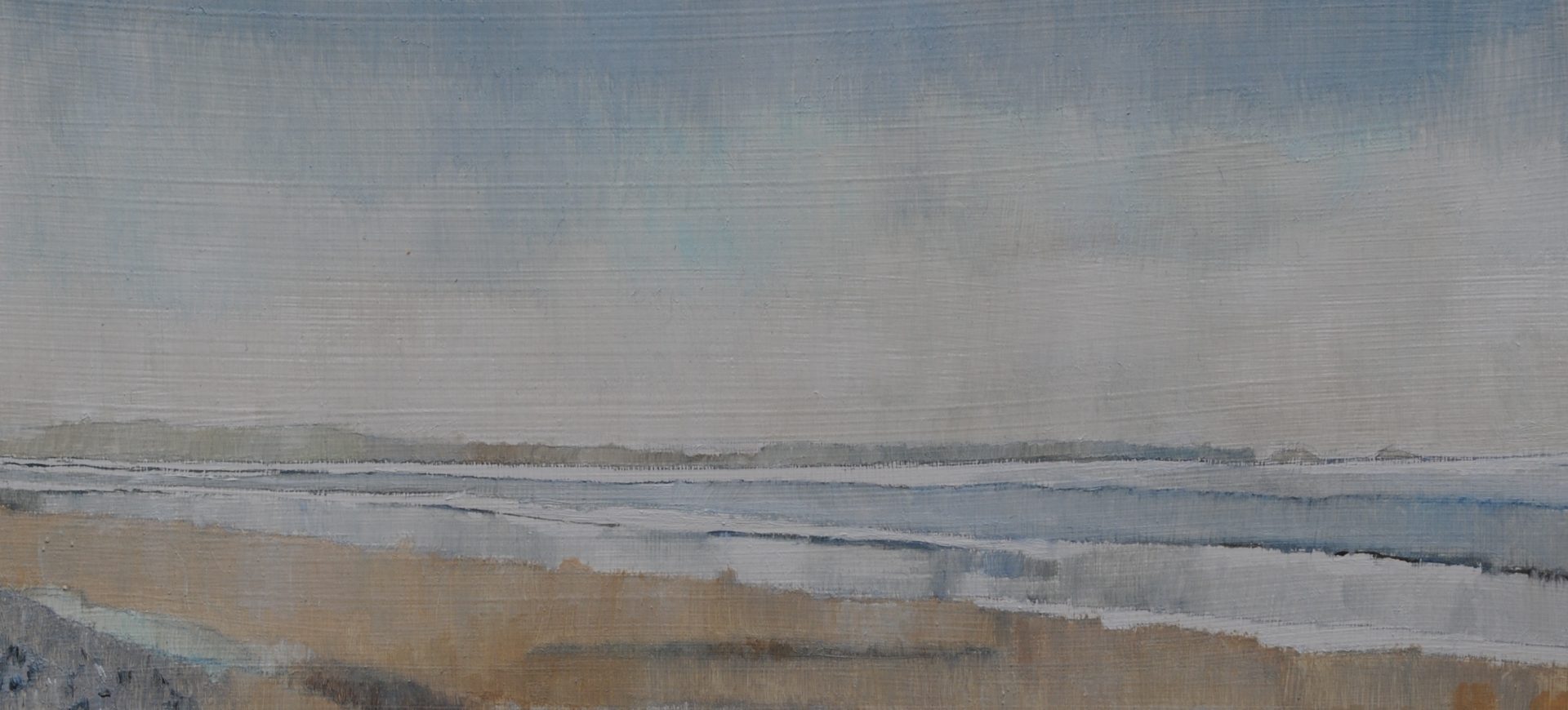
National Library of Wales silent on plan to release thousands of publicly-owned pictures for prestigious new Aberystwyth art gallery
EACH YEAR, about 70,000 visitors flock to the National Museum of Wales in Cardiff, a majority, probably, to see its scintillating collection of more than 2,500 oil paintings.
At Swansea’s Glynn Vivian Art Gallery, hundreds of British and European old masters and surrealist and impressionist works attract around 40,000.
In London, millions visit the National Gallery with its 2,300 pictures.
As cultural and touristic magnets, art galleries enchant and cheer and inspire and, just now, transport us to somewhere blissfully beyond grinding anxieties about climate disruption and the pandemic.
They are also very good for local economies. Unlike seasonal tourism, they are year-round magnets. Machynlleth’s Museum of Modern Art knows this, as does Margate, where the establishment of the Turner Contemporary art gallery is credited with increasing tourism by 62 per cent and helping to inject £20m into the local Kent economy.
For Aberystwyth, such an asset would be a godsend. A major new art gallery would be guaranteed to revive the spirit and stimulate the economy of a town sagging under the shadow of Covid-19.
It would greatly strengthen the cultural kudos Aberystwyth already enjoys, while decisively putting the town on the map as a fine-art mecca comparable with the best anywhere. helping enormously to reanimate a town badly knocked in recent years by job-losses and by shop-closures in the wake of the online-buying obsession and Covid.
So is this achievable? Absolutely it is. This is a prize enticingly, and entirely, within our grasp, and one that would splendidly complement the unfolding Old College cultural centre project. For, unknown to most people, Aberystwyth already possesses a single huge, unique and magnificent collection of paintings. And this a collection, crucially, that is owned by the public.
The scale is astounding. For the roughly 2,200 publicly-owned oil paintings held by the National Library of Wales in its fine Edwardian building overlooking Aberystwyth is almost equal in number to those at the National Gallery, or at the National Museum of Wales.
The national library collection is unique, partly because it includes a phenomenal array of riveting portraits of people central to the social, political, educational and political history of Wales over centuries, as well as glorious landscapes and other works, and the world’s biggest collection of landscapes and portraits by Kyffin Williams, probably Wales’s most applauded 20th century artist. In total, the range is vast, and of staggering beauty and variety in subject-matter and styles.
Other titans represented include William Coldstream, Gainsborough, Augustus John, Gwen John, Turner (his Dolbadarn Castle is on long-term display), Gwynedd Tomos, Gladys Vasey, Evan Walters, Claudia Williams and Evan Williams. And there is wonderful work by numerous others.
The big difference between the great collections of Cardiff and London, and Aberystwyth’s, is that the vast bulk of ours are never seen by us, the people who own them. Instead, they are kept in storage. A very limited number sometimes appear in exhibitions at the library, and some occasionally turn up, on loan, at galleries elsewhere.
But, mostly, this is a monumental cultural storehouse with its doors firmly closed, its magnificent contents nearly all, and nearly always, unseen, these thousands of works of art instead kept in stacks deep in the library building on Penglais.
To be sure, there are blank walls in parts of the library where some of these paintings could be shown, but aren’t. At the same time, exhibitions in the library’s Gregynog Gallery inevitably squeeze out pictures in the stored collection.
All of which argues that the library should be receptive to any serious proposal which would allow – no doubt on a rotational basis – these thousands of works to see the light of day. After all, artists paint to be seen. Kyffin Williams, for example, who left the library a total of 1,700 works, and more than £400,000, particularly wanted his output to be displayed publicly.
Also, there is a persuasive argument that dispersal of great national collections offers greater protection than centralisation under one roof. The serious fire at the library in April 2013 underlines this. The blaze was in the roof, but there can be no guarantee that a similar disaster couldn’t happen in parts of the building where paintings are kept.
So where could our new Aberystwyth gallery be housed? Look no further perhaps than the former St Paul’s Chapel in Upper Great Darkgate Street, a spacious late 19th-century grade 2-listed pile built by the town’s Wesleyans. Abandoned as a chapel in 1992, it was converted into a pub – The Academy – seven years later, a bizarre metamorphosis given Wesleyans’ animosity towards drink. The pub closed down 18 months ago. This classically handsome building, and an attached former schoolroom dating from 1903, are for sale (about £475,000) or lease (around £20,000).
Another possibility could be the disused Deva building on the seafront, or (though probably too small) the nearby university-owned grade 2-listed Assembly Rooms, the national library’s original home. There may be other suitable town centre buildings, and a purpose-built gallery shouldn’t be seen as an impossibility.
Potential financial backing for what would be a major scheme would include National Lottery money awarded by the Arts Council of Wales, which, very relevantly, also distributes Welsh Government funds to “nurture and develop high-quality Welsh arts activity.” Councils should also be asked to chip in.
But what of the national library itself? Will it support release to the public gaze its publicly-owned paintings? So far, the signs are not good.
I outlined my proposal in a 400-word message to the library and was told it “sounds like a great idea”, and “something to be discussed with our exhibitions officer…” A fortnight later, having heard nothing, I emailed again. The reply: my message had been forwarded “to one of the directors for him to get back to you.” But no-one has. Odd.
 Bronterre News